
Whether you’re following a new recipe or scaling ingredients for meal prep, understanding basic measurement conversions can save time—and prevent kitchen disasters. One of the most common questions that pops up is: how many tablespoons are in an ounce?
It might seem like a small detail, but it can make a big difference when you’re trying to cook or bake with precision.
Let’s clear things up so you’ll never need to guess again in the kitchen.
Table of Contents
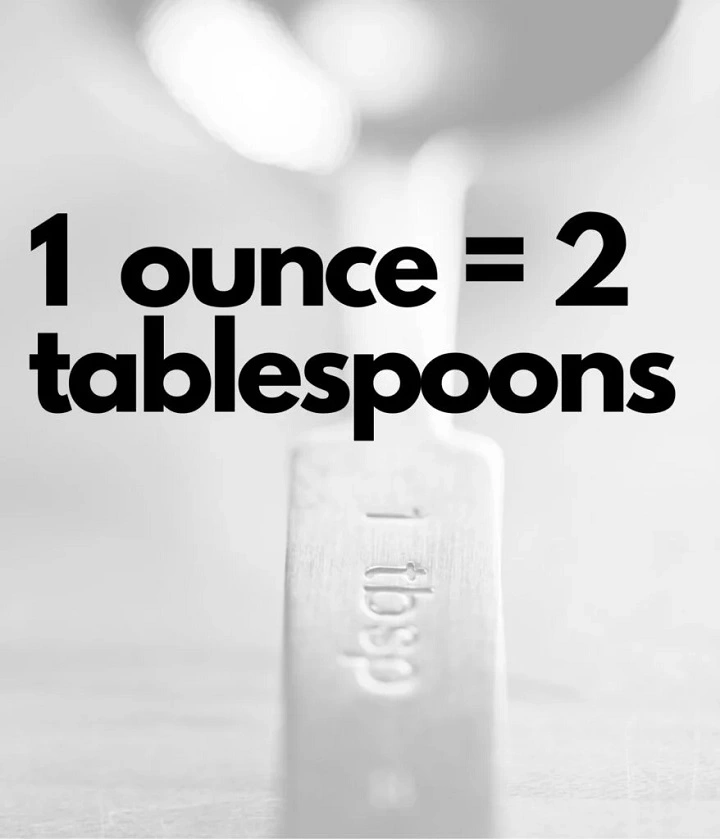
Quick Answer: 1 Fluid Ounce = 2 Tablespoons
In U.S. standard measurements:
- 1 fluid ounce (fl oz) = 2 tablespoons (tbsp)
- 1 tablespoon = 0.5 fl oz
This applies to liquid measurements. So if a recipe calls for 2 fluid ounces of olive oil, that’s equivalent to 4 tablespoons.
Basic Fluid Ounce to Tablespoon Chart
| Fluid Ounces (fl oz) | Tablespoons (tbsp) |
| 1 fl oz | 2 tbsp |
| 2 fl oz | 4 tbsp |
| 4 fl oz | 8 tbsp |
| 8 fl oz (1 cup) | 16 tbsp |
This conversion is helpful when you’re using measuring spoons instead of a liquid measuring cup, especially for small-batch recipes or when portioning out ingredients like dressings or oils.
What About Dry Ounces?
Dry ounces are a measure of weight, not volume—so converting tablespoons to dry ounces depends on the density of the ingredient.
Here are a few common examples:
| Ingredient | 1 oz (weight) = ? tbsp |
| All-purpose flour | ~3.5 tbsp |
| Granulated sugar | ~2.25 tbsp |
| Cocoa powder | ~3 tbsp |
| Butter | 2 tbsp (since 1 oz = 28.35g and 1 tbsp = ~14g) |
So while 1 fluid ounce = 2 tablespoons, the conversion for dry ounces varies by ingredient. That’s why it’s best to use a kitchen scale for dry ingredients when a recipe lists ounces by weight.
Understanding the Difference: Fluid vs. Dry Ounces
This is where many people get tripped up. Here’s the key:
- Fluid ounces measure volume (used for liquids like water, milk, oil)
- Dry ounces measure weight (used for solids like flour, sugar, nuts)
So you can’t always use tablespoons to replace dry ounces unless you know the ingredient’s weight-to-volume ratio.
Example:
- 1 oz of olive oil = 2 tablespoons
- 1 oz of flour ≠ 2 tablespoons (it’s closer to 3.5)
U.S. vs. U.K. Tablespoon Conversions
If you’re following an international recipe, keep in mind:
| Country | 1 Tablespoon = ? ml |
| U.S. | 14.79 ml (~15 ml) |
| U.K. | 15 ml |
| Australia | 20 ml |
In the U.S., 1 fl oz = ~29.57 ml. So:
29.57 ml ÷ 14.79 ml = 2 tbsp
That’s how we get 1 fluid ounce = 2 tablespoons in U.S. measurement.
Why This Conversion Is Useful
This quick conversion comes in handy when:
- Scaling recipes for smaller or larger batches
- Making homemade salad dressings, sauces, or cocktails
- Measuring cooking oils or syrups without a measuring cup
- Portion control or meal planning when ounces are listed
For example, a smoothie recipe that says “1 oz of flax oil” means you’ll need 2 tablespoons.
Quick Conversion Chart
| Measurement | Equivalent in Tablespoons |
| 1 fl oz | 2 tbsp |
| 2 fl oz | 4 tbsp |
| ¼ cup (2 fl oz) | 4 tbsp |
| ½ cup (4 fl oz) | 8 tbsp |
| 1 cup (8 fl oz) | 16 tbsp |
| 1 stick butter (4 oz) | 8 tbsp |
FAQs About Tablespoons and Ounces
Is 1 oz always 2 tablespoons?
Only for fluid ounces. Dry ounces vary by ingredient.
How many tablespoons in 1 oz of butter?
2 tablespoons. Each U.S. stick of butter is 4 oz, or 8 tbsp.
What if my recipe uses ounces and I only have spoons?
If it’s a fluid ounce, just multiply by 2 to get tablespoons. For dry ingredients, consult a conversion chart or use a kitchen scale.
Can I use teaspoons instead?
Yes. There are 3 teaspoons in 1 tablespoon, so 1 fluid ounce = 6 teaspoons.
Is the conversion the same in the metric system?
Metric recipes use milliliters (ml), but you can still apply: 1 U.S. fl oz = ~30 ml, and 1 U.S. tbsp = ~15 ml.
Knowing that 1 fluid ounce equals 2 tablespoons is a small but powerful bit of knowledge in any kitchen. It helps you measure more accurately, cook more confidently, and convert recipes with ease—whether you’re cooking dinner or baking dessert.
Just remember: fluid ounces measure volume, dry ounces measure weight—and with that, you’re ready for whatever your recipe throws at you.