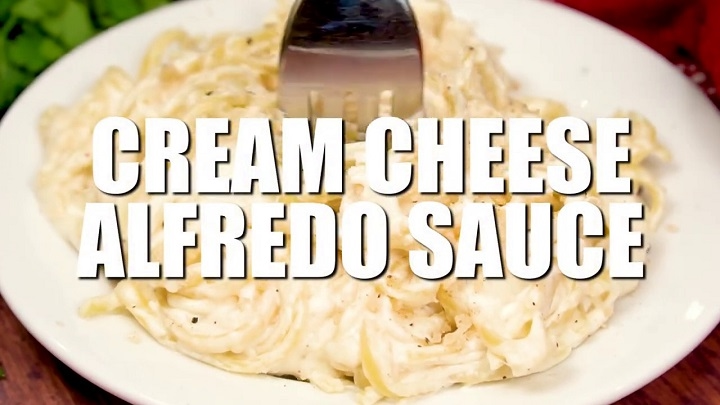

Heavy sauces often seem too hard, like they need special skills. Yet here, simplicity wins – cream cheese steps in quietly. No magic tricks unfold, just seeing how things blend matters more now. The old fettuccine Alfredo relies on Parmesan softening in warm pasta liquid, warmth used slow until smooth without splitting. Beyond the usual, a shift occurs when cream cheese takes place. Real, yet altered, it brings richness through fat, structure via protein, texture shaped by moisture – each element redefining the move.
Table of Contents
Why Cream Cheese Changes the Sauce
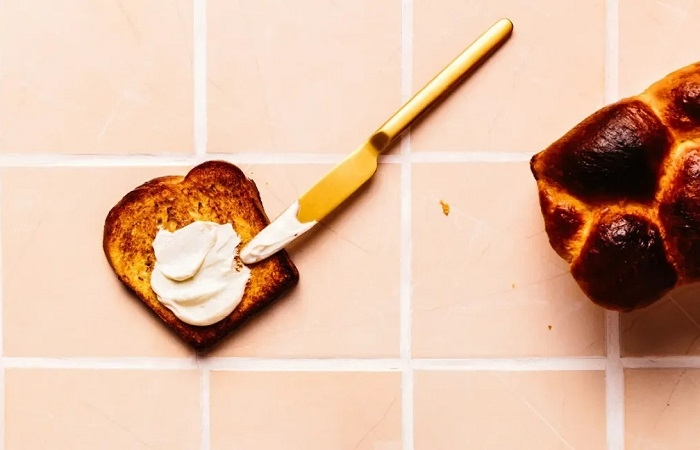
Home cooks often see cream cheese just as a spreadable dairy option, similar in feel though not flavor. Yet it is built differently than long-aged varieties. With roughly half water, it holds far more liquid than Parmesan’s one-third. Most store versions include extras like xanthan gum or carob bean gum. Old-school Italian ways skip these entirely. When heat hits the sauce, its texture shifts. Warming it slow helps cream cheese mix in smooth – the fats and stabilizers inside keep it steady, avoiding clumps that shredded types often form under high warmth.
Cream Cheese vs Parmesan in Sauce
| Feature | Cream Cheese | Parmesan |
| Texture | Soft and spreadable | Hard and aged |
| Moisture | Holds more water | Holds less water |
| Sauce behavior | Blends smoothly with slow heat | Can clump if overheated |
| Flavor | Mild and creamy | Salty, nutty, sharp |
| Best use | Easy creamy sauce | Classic Alfredo base |
Why This Method Is More Forgiving
One useful thing happens here: mistakes matter less. Making classic Alfredo requires hitting the right heat exactly. Heat it too much, and the cheese proteins clump and push out oil. That creates a break you cannot fix easily. But stir in cream cheese first, particularly when brought to room warmth ahead of time, and stability improves. Slowing things down spreads milk fat around so the sauce stays smooth. It is not better really. It just behaves another way.
Ingredients for Alfredo Sauce Recipe with Cream Cheese
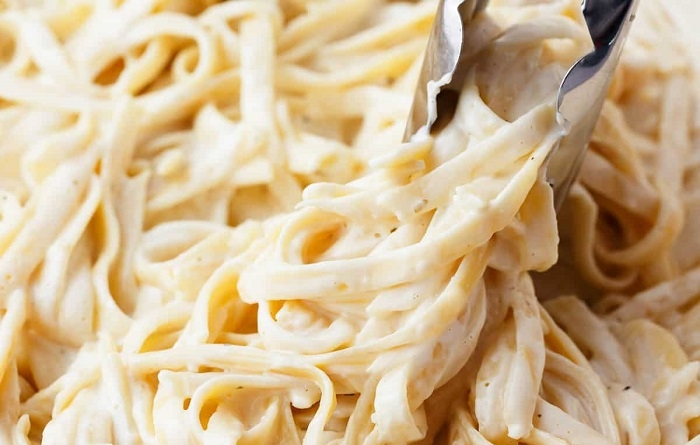
| Ingredient | Amount | Purpose |
| Full-fat cream cheese | 1 package | Gives body and smoothness |
| Rich cream or unfiltered milk | 12 tablespoons | Loosens the sauce |
| Fettuccine | 12 ounces | Holds the sauce well |
| Parmesan | ¾ cup | Adds salty, deep flavor |
| Pasta water | 1 cup reserved | Helps the sauce blend |
| Black pepper | Optional | Adds warmth |
| Lemon juice | Optional | Lifts the dense flavor |
Preparing the Cream Cheese Base
Most of the time, things mix better if nothing is too cold. Take the cream cheese out about half an hour before you need it. Chilled pieces will not smooth out easily. You can keep swirling, but they may still clump. Only go with full-fat cream cheese, never skimmed types, since watery kinds bring extra moisture plus thickening agents that act odd when warm. One entire package pairs well alongside twelve tablespoons of rich cream or unfiltered milk. Start heating them slowly in a pan using low to medium warmth. Stir with a whisk until they are almost even. A bit of lumpiness may stick around. Do not worry. That vanishes down the line.
Quick Cream Cheese Base Tips
- Let cream cheese soften before cooking.
- Use full-fat cream cheese only.
- Keep the heat low to medium.
- Whisk slowly and steadily.
- Do not panic over small early lumps.
Cooking the Pasta and Saving the Water
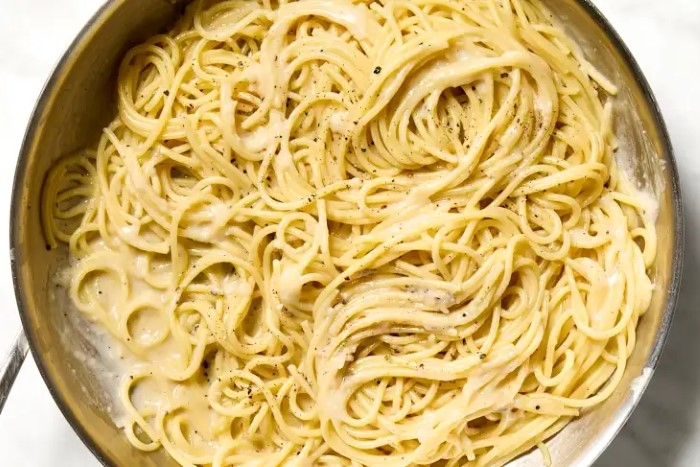
Halfway through, drop twelve ounces of fettuccine into bubbling salted water. Before tipping it out, set aside a whole cup of the thick, cloudy liquid left behind. Depending on the flour or maker, starch amounts shift slightly. Still, every kind does the job. It breaks up resistance where oil meets water and keeps things blended. It is not some trick. It is just ordinary science showing up in pots across continents.
Adding Parmesan the Right Way
A handful of freshly shaved Parmesan goes into the creamy warmth. It is best if it is real Parmigiano Reggiano. Begin with three-quarters cup. Mix at a slow pace. Too much can spoil things. Once melted, there is no taking back. Watch heat like a shadow. Let it stay under simmer point. Rising bubbles mean trouble, breaking the smooth bond. Pull the pot off the flame now and then when the warmth climbs too near the edge.
Tossing the Noodles into the Sauce
Right away, drop the strained noodles straight into the simmering sauce. Keep turning them nonstop, pouring in splashes of saved cooking liquid every now and then. Stirring keeps things moving. Stillness invites lumps. Constant motion wraps every piece evenly and helps it soak up flavor just right. Stop when the coating feels light, not gathering in puddles underneath.
What You Can Add to the Sauce
Some extras can join, yet they shift what it truly is. Warmth comes through black pepper, minus any sugar trace. Lemon juice might lift dense notes, yet pour slow, or sourness can bring split textures. Fat sits fine here already. Butter just repeats what cream cheese brought first.
Optional Add-Ins
| Add-In | What It Does |
| Black pepper | Adds gentle warmth |
| Lemon juice | Brightens the heavy creaminess |
| Garlic | Adds deeper savory flavor |
| Butter | Adds more richness, though not needed |
| Extra Parmesan | Makes it stronger, but can thicken too much |
Storing and Reheating the Sauce
When made like this, the sauce changes texture as it chills, unlike regular kinds. Cold storage makes leftover portions thicken a lot, thanks to how cream cheese sets when cool. To warm again, add liquid gently. Try milk or stock. Never heat without moisture. Fast heating in a microwave creates spotty results and can push fat out into pools.
Serving the Pasta Fresh
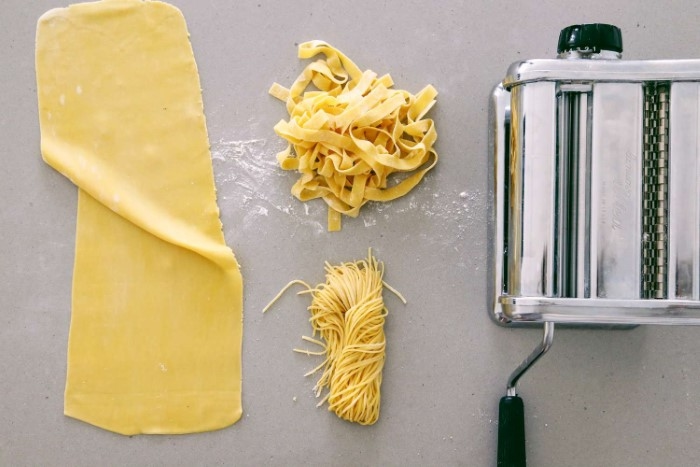
Right away is best when serving. Texture loses its edge after a short while. Smoothness slips by minute twenty. Add garnish only if needed. Too much parsley pulls eyes off the plate. More cheese hides delicate notes. Paying attention to moments matters most, not how it looks.
The Real Story Behind Fettuccine Alfredo
Few people realize where fettuccine Alfredo truly began. Rome gave it life in the early twentieth century. A man named Alfredo di Lelio prepared the dish first. He relied solely on butter, along with Parmigiano Reggiano. The cheese melted into the pasta through tableside mixing. Over time, U.S. versions began adding cream, but that came much later. Still, tossing in cream cheese pushes things forward. Yet it does not earn a pass to pretend it is old-school. Labeling the result “Alfredo” shows how words shift over time, not respect for roots.
Why This Cream Cheese Version Still Makes Sense
Even so, meals evolve. Flavors move across borders. Limits change shape over time. Most home stoves cannot match a pro range’s quick response. Cream cheese steps in, easy to find and never pretending. It is not an imitation of old recipes. It is just a fit for how things are now.
Common Mistakes to Avoid
| Mistake | What Happens |
| Using cold cream cheese | Sauce may stay lumpy |
| Heating too fast | Fat can separate |
| Adding too much Parmesan | Sauce can become too thick |
| Forgetting pasta water | Sauce may not blend well |
| Reheating without liquid | Leftovers can turn oily |
FAQs
Can I use low-fat cream cheese ?
It is better not to use low-fat cream cheese. Watery kinds can act odd when warm and may not give the same smooth texture.
Why does pasta water help the sauce ?
Pasta water has starch. It helps oil and water stay together, so the sauce coats the noodles better.
Can I add butter to this sauce ?
Yes, but it is not really needed. Cream cheese already brings fat and richness.
Why should I serve it right away ?
The texture is best when fresh. After a short while, the smoothness starts to fade.
Is this traditional Alfredo ?
No. Traditional Alfredo uses butter and Parmigiano Reggiano. This version is more of a modern creamy Alfredo-style sauce.
Out here, names do not carry the weight results do. Call it creamy garlic pasta or something closer to Alfredo. What counts is how it holds together, feels on the tongue, and stays smooth without graininess. Fixating only on authenticity misses the point of function. Changing a thing does not mean giving up. Often, that shift is just clever fixes dressed up as comfort.