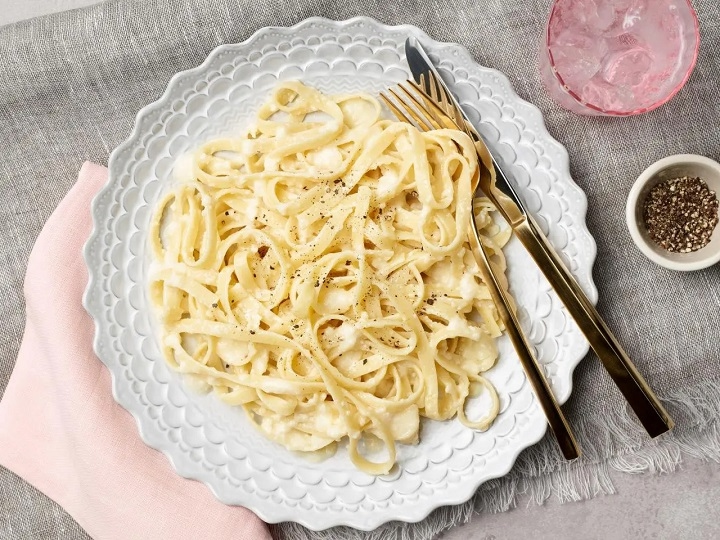

Smoothness often beats flavor when it comes to pasta. Take Alfredo – typically a blend of melted butter, Parmesan, and heavy cream – it’s the fat that creates silkiness on the tongue. What if cream isn’t available? Dietary needs might block its use altogether. Without it, attention turns to alternatives, showing how milk fats cling once warmed.
Table of Contents
Why Alfredo Sauce Usually Needs Cream
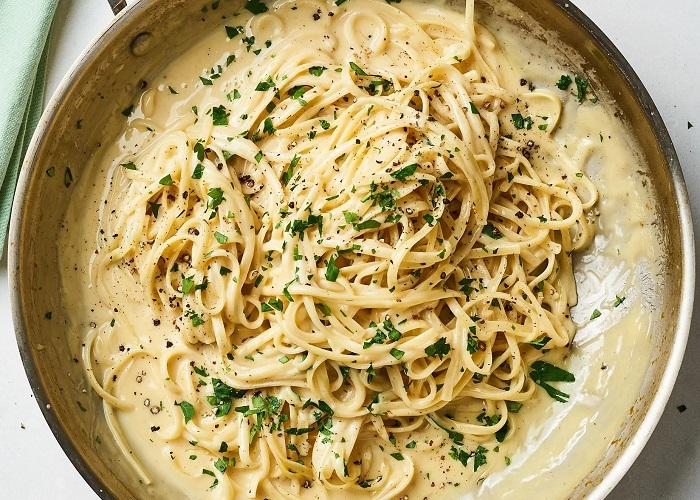
Oddly enough, leaving out heavy cream at home seems to dull the taste. Still, that idea falls apart once heating and stirring are adjusted just right. It’s true that cream brings both richness and a bit of wetness. Yet the real job lies in its ability to bind things, letting cheese melt without breaking. Without it, you’re just one step away from scrambled mess. Cream keeps the peace. What matters here isn’t matching the heaviness of cream. It’s about shaping the way cheese proteins behave as heat hits them.
What Heavy Cream Does in Alfredo Sauce
| Heavy Cream Role | Why It Matters |
| Adds fat | Gives the sauce richness |
| Adds moisture | Helps loosen the cheese |
| Slows heat | Protects cheese from clumping |
| Builds texture | Makes the sauce feel smooth |
| Helps stability | Keeps the sauce from splitting |
Why Alfredo Sauce Turns Gritty
Most home attempts go gritty because heat hits hard. Casein proteins in Parmigiano-Reggiano react badly past 70°C or 160°F. They stiffen, squeeze out water, then lump up. Cream helps by spreading things thin and slowing the temperature jump. So if you skip it, swap it wisely. Mimic what it does, not just what it is.
The Best Base Without Heavy Cream
Warm milk mixes with starchy water left from cooking pasta. That starch gets in the way of clumping. It slips between bits of softening cheese and keeps them apart. On its own, milk does not have sufficient fat. But when blended with added butter and stirred just right, the mix holds together. Cheese goes in after removing the pan from flame. Fold it in bit by bit, using liquid that is heated but never bubbling.
Simple Ingredient Guide
| Ingredient | Purpose |
| Warm milk | Replaces cream’s moisture |
| Butter | Adds needed fat |
| Pasta water | Adds starch and smoothness |
| Parmesan | Gives Alfredo flavor |
| Salted pasta | Builds flavor from the start |
| Gentle heat | Stops the sauce from splitting |
How to Make Alfredo Sauce Without Heavy Cream
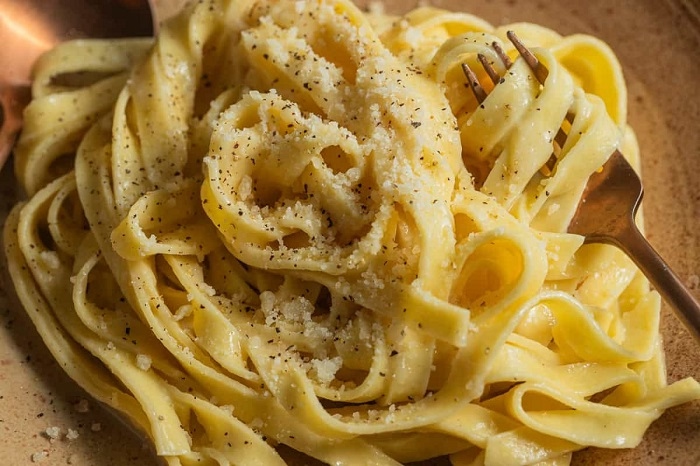
Cook the Pasta First
Boil the pasta in salted water. Before draining, save some of the cloudy pasta water. This water is not waste. It helps the sauce stay together.
Warm the Milk Slowly
Warm the milk gently. Do not boil it. Hot but calm liquid works better than bubbling liquid.
Add Butter for Fat
Milk alone is too thin. Butter gives the sauce the fat it needs. This helps the sauce feel closer to classic Alfredo.
Remove the Pan from Heat
This step matters most. Cheese should not hit strong heat. Take the pan off the flame before adding Parmesan.
Fold in the Cheese Slowly
Add cheese little by little. Stir gently. Let each small amount soften before adding more.
Use Pasta Water to Adjust Texture
Add pasta water in small splashes. Keep stirring until the sauce wraps the pasta without turning thick or grainy.
Cauliflower as a Texture Helper
Bent shapes of cauliflower can get blended into the mix. Sounds odd, sure. Yet older florets hold natural compounds that shift toward an earthy note once heated. The taste is not doing the heavy lifting, though. As they cook and spin in the machine, those tough outer layers turn into something gel-like, almost gluey. It is close to what happens when flour soaks up warm butter. That goo wraps every ridge of pasta without sliding off. The role is pure texture. Taste just tags along.
Goat Cheese Powder and Parmesan
That odd white powder can be dried goat cheese. Warmed slowly, it slips right into liquids faster than most dairy powders around. More short-chain fats inside mean quicker blending when heat stays mild. A sharp little bite wakes up bland mixes others leave flat. Try stirring in three scoops aged Parmesan alongside one scoop of the rehydrated goat kind, already melted into hot stock. It stays smooth and does not split easily, even as temperature climbs.
Cheese Melting Tips
Cold cheese hitting a hot pan causes most melt issues. Temperature shifts matter way more than ingredient proportions. Sudden drops scramble the tiny structures holding melted dairy together. Using a double boiler helps prevent that collapse. Grated bits left close to steaming food warm up safely too. Smooth results start long before stirring begins.
Helpful Melting Rules
- Do not add cold cheese to a hot pan.
- Let grated cheese warm slightly first.
- Keep liquid hot, but not boiling.
- Add cheese away from direct heat.
- Stir slowly and steadily.
- Use pasta water to loosen the sauce.
Why Grating Style Matters
Surprisingly, how much surface a cheese has can change how it melts. Tiny bits made by microplanes let fats escape easier through tiny gaps in the crystals. A box grater does the job. People have relied on them forever. Yet the strands tend to clump if left alone too long.
| Grating Method | Result |
| Microplane | Melts faster and finer |
| Box grater | Works well but may clump |
| Pre-shredded cheese | Often melts poorly |
| Large shavings | Need more time and care |
Why Fresh Sauce Works Best
Outcomes shift when time passes. What was once good cold often turns strange when warmed again. That happens because stiffened fats clump into odd textures. Building it fresh beats fixing what sat too long. Plan portions knowing some things lose their edge after waiting.
Common Mistakes to Avoid
| Mistake | What Happens |
| Boiling the milk | Sauce may split |
| Adding cheese over high heat | Cheese can turn gritty |
| Using cold cheese | Melting becomes uneven |
| Skipping pasta water | Sauce may feel flat or broken |
| Reheating too fast | Texture can turn strange |
FAQs
Can Alfredo sauce be made without heavy cream ?
Yes. Warm milk, butter, pasta water, and careful heat can create a smooth sauce without heavy cream.
Why does Alfredo sauce get gritty ?
It often gets gritty when Parmesan is heated too much. High heat makes cheese proteins tighten and clump.
Can milk replace heavy cream in Alfredo sauce ?
Milk can help, but it needs butter and pasta water to work better. Milk alone does not have enough fat.
Should cheese be added on or off the heat ?
Cheese should be added off the heat. This helps it melt smoothly without splitting.
Is cauliflower useful in Alfredo sauce ?
Yes, if blended well. It can add body and help the sauce cling to pasta.
Surprisingly, leaving out heavy cream shows a subtle truth. How you do things shapes flavor more than what you use. Skill emerges not by copying, but by adjusting within limits. The act of cooking moves away from imitation and into function. When you grasp the levels of reaction, how proteins behave, gels form, and heat travels, choices shift. Chasing “creamy” fades once control over thickness begins. Perfection is not really possible here. Every option swaps something, maybe a hint of greens, a touch of tang, or a different texture on the tongue. Yet when you stop chasing exact copies, outcomes tend to improve. Settling into flaws often works out better than pretending they can vanish.