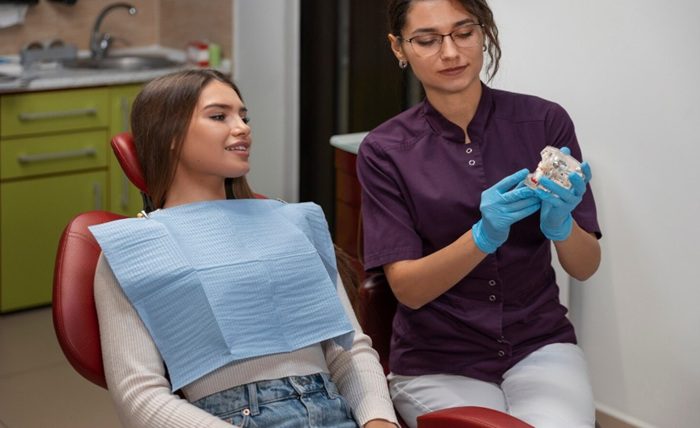

You might be looking at your teeth in photos and thinking, “They are not terrible, but they are not what I want to see for the next ten years either.” Maybe you have a small gap that always draws your eye, a tooth that looks a bit short, or enamel that never quite looks white, no matter how often you bleach it. You want a better smile, but you also feel nervous about shaving your teeth down. A skilled dentist Fresno can talk you through options that improve your smile while preserving as much natural tooth structure as possible.end
Because of this tension, you might have heard about no prep veneers and thought, “That sounds perfect. A new smile without drilling. Why would anyone say no to that?” Then you start reading, and the stories are mixed. Some people love them. Others feel they were not the right choice. It is confusing, and you might worry about making an expensive mistake you cannot undo.
The short version is this. No prep veneers can be a gentle, conservative way to improve your smile, but they are not a magic solution for every mouth. They work beautifully for a specific kind of tooth shape and bite, and they can create problems if used where they do not belong. Understanding where they shine and where they fall short is what protects you from regret.
Table of Contents
What are no prep veneers, and how are they different from regular veneers?
Traditional porcelain veneers usually require your cosmetic dentist to remove a thin layer of enamel from the front of your teeth. This gives the veneer room to sit so your teeth do not look bulky. It also helps the veneer bond securely.
No prep veneers, sometimes called minimal prep or ultra-thin veneers, are designed to be so thin that in many cases they can be placed directly on the enamel with little or no drilling. That is the appeal. Less drilling. Often, no shots. Less time in the chair. In some cases, if they ever need to be removed, your underlying tooth is closer to how it started.
So, where is the catch? If you place material on top of a tooth without making space, the tooth gets thicker and can look or feel bulky. For some people, this is fine, or even helpful. For others, it can affect the bite, the way the lips rest, or how natural the smile looks.
Who is actually a good candidate for no prep veneers?
Imagine two different people thinking about cosmetic treatment.
Person A has slightly small teeth with spaces, a few teeth that tilt inward, and enamel that looks a bit worn. Their smile looks a little “collapsed.” Adding a thin layer of porcelain to these teeth can fill out the smile, close gaps, and support the lips. No prep veneers often work very well here.
Person B has full, straight teeth already close to the ideal size. The main concern is color. If you add porcelain on top of teeth like these without removing any enamel, the result can look thick or “fake,” and the edges may feel bulky against the lips or tongue.
Because of this, no prep veneers tend to work best when:
- Your teeth are slightly small, short, or set back.
- You have mild spacing or gaps between teeth.
- Your enamel is intact and healthy.
- Your bite is not overly crowded or “edge to edge.”
- You are looking for modest shape changes and color improvement, not a completely different tooth position.
They are often less suitable if:
- Your teeth already feel big or protrusive.
- You have significant crowding or rotation.
- Your bite is complicated, with grinding, clenching, or jaw pain.
- You need major color masking, for example, for deep stains on many teeth.
Modern materials are strong and can be very thin, as discussed in resources on current dental ceramics from the National Institute of Dental and Craniofacial Research. Even so, “thin” is not the same as “for everyone.” The right match between material and mouth is what matters.
What can go wrong if no prep veneers are used when they are not appropriate?
This is where the stress often creeps in. You may have seen before-and-after photos that look amazing, but you also hear stories about veneers that feel thick or teeth that become sensitive.
Here are some of the problems that can show up when no prep veneers are used in the wrong situation.
- Bulky or unnatural appearance. If your teeth did not have room for extra thickness, your smile can look too full. The edges of the teeth may look heavy, and the way light reflects can seem off.
- Gum irritation. Extra thickness near the gumline can make it harder to clean well. Plaque collects more easily, and gums may become red or inflamed.
- Bite changes. Even a small change in thickness can alter how your upper and lower teeth meet. Over time, this can lead to chipping, wear, or jaw discomfort.
- Limited ability to fix deeper problems. No prep veneers cannot correct significant misalignment or structural damage. In those cases, orthodontics or more substantial restorations may be safer and more predictable.
Sometimes a more traditional veneer or even a crown is the wise choice, especially if a tooth is already heavily filled or cracked. You can see how veneers, crowns, and bridges are used differently in smile makeovers through the University of Rochester’s patient guide to veneers, crowns, and bridges.
So, where does that leave you if you like the idea of conserving tooth structure, but you also want a result that will age well?
How do no-prep veneers compare with traditional veneers in real life?
It can help to see the tradeoffs side by side. Every mouth is unique, but there are some general patterns that come up again and again when deciding between minimal prep veneers and conventional options.
| Question | No Prep Veneers | Traditional Veneers
|
|---|---|---|
| Enamel removal | Little to none in ideal cases | Usually a thin layer is removed for space and fit |
| Best suited for | Smaller or slightly set back teeth, mild gaps | Normal or larger teeth, more shape or alignment changes |
| Risk of bulky look | Higher if teeth were already full-sized | Lower because space is created |
| Comfort during procedure | Often no numbing, shorter visits | Usually requires numbing, more shaping time |
| Reversibility | Sometimes closer to the original tooth if removed | Tooth is permanently altered |
| Suitability for heavy stains or damage | Limited for deep discoloration or large fillings | Better for masking dark teeth and restoring structure |
Whichever path you consider, it should line up with sound restorative principles. Professional guidelines on how much tooth to remove, where to place edges, and how to protect the bite are summarized in documents such as this restorative dentistry fact sheet. When your cosmetic plan respects those boundaries, your chances of a long-lasting result improve.
Three steps to move forward with confidence
When you feel torn between wanting a better smile and fearing an irreversible decision, it helps to slow the process down and ask for clarity, not quick promises.
- Get a thorough evaluation, not just a quick “yes, you are a candidate.”
Ask for a full exam that includes photos, X-rays where appropriate, and a bite assessment. Share what bothers you most about your smile and what you absolutely want to avoid, for example, “I do not want my teeth to be drilled unless there is no other option.” A thoughtful cosmetic dentist will tell you where no prep veneers make sense and where they do not, and may suggest alternatives such as whitening, bonding, or orthodontics combined with cosmetic dentistry rather than jumping straight to porcelain on every tooth.
- Ask to see a mock-up or preview of the added thickness.
Before anyone bonds porcelain, it is reasonable to ask for a preview of how the added material will affect your smile and speech. This might be done with temporary material directly on your teeth or with digital simulations and a try-in. Pay attention to how your lips rest, how your teeth feel when you close, and whether anything feels bulky. This is your chance to speak up before changes are permanent.
- Talk openly about maintenance, lifespan, and “what if” scenarios.
Every veneer, prep, or no prep, has a lifespan. Ask how long your dentist expects your no preparation veneers to last in your specific case, what habits might shorten that time, and what the plan would be if one chips or fails. A candid conversation about night guards, checkups, and possible future replacements will help you understand the true long-term commitment, not just the upfront cost.
Finding the right smile solution for you
You do not have to choose between doing nothing and signing up for a treatment that makes you uneasy. There is room for questions, for second opinions, and for a plan that respects both your teeth and your peace of mind.
No prep veneers can be a gentle, conservative option when used in the right mouths for the right reasons. When they are pushed into situations they were never meant for, they can create the very problems you are trying to avoid. Your goal is not just a quick “after” photo. It is a smile that feels like you, looks natural, and stays healthy over time.
If you are unsure where you fit, start by having an honest conversation with an experienced cosmetic dentist, bring your questions, and ask to see examples of cases similar to yours. You deserve clear information, no pressure, and a treatment plan that you can feel calm about when you finally say yes.