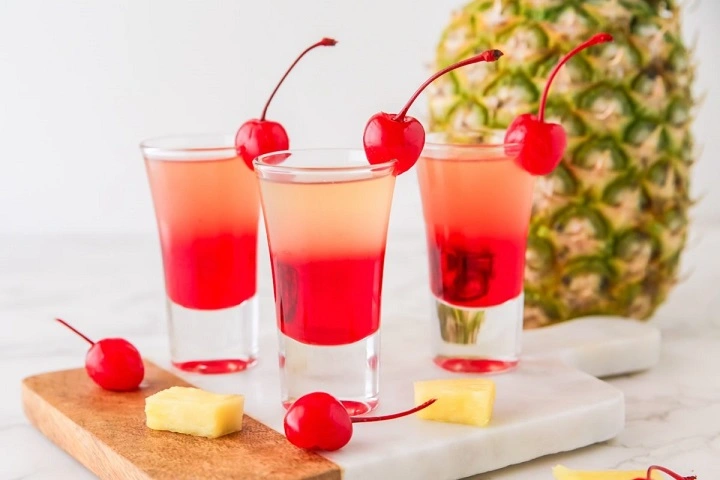

Pineapple upside down cake does more than satisfy sweet teeth. Born out of 1920s kitchen shortcuts, it flipped dessert rules without warning. Then comes the so-called shot version – unlisted in manuals, unbranded, unseen on tiki menus. Still, rumors spread through digital corners. Could that rich, golden slab become something you sip instead? What would that even take?
Begin with maraschino cherries sitting beside canned pineapple rings, brown sugar, soft butter, then layers of cake. Not chosen by chance. Heat changes sugar – it cracks open into furans, turns into rich caramels. Pineapple carries bromelain inside, an enzyme that unravels protein chains. As liquid, it blocks gelatin from setting; in a quick pour, texture shifts unless managed carefully.
Table of Contents
Measurements
| Ingredient | Amount |
| Pineapple upside down cake | About 75 grams |
| Warm water | 1 tablespoon (40–50°C) |
| Clear liquor | ½ teaspoon (40% ABV) |
| Coffee filter or fine sieve | For straining |
| Chilled serving glass | 2 oz capacity |
What Makes a Pineapple Upside Down Cake Shot Different?

Start with a slice of baked pineapple upside down cake – one part out of eight, if it’s an 8-inch circle. Break it into tiny pieces; smaller bits mean more exposure. A splash of warmth helps, so mix in a tablespoon of heated water.
Include half a teaspoon of transparent liquor – vodka works, or any neutral spirit at 40%. Water needs help unlocking taste molecules; that’s where the alcohol steps in. Wait ten minutes. Stir two times, slow and soft.
After filtering, what you get looks cloudy, golden, not transparent. A coffee strainer works just as well as a tight sieve. This leftover liquid holds hints of vanilla, dark caramel, along with faint fruity tones. The amount ends up tiny – roughly thirty milliliters. People call that portion the “shot.”
Why Each Ingredient Matters
| Ingredient | Purpose |
| Cake | Provides flavor base |
| Pineapple | Adds fruit notes |
| Brown Sugar | Creates caramel character |
| Vodka | Helps release aroma compounds |
| Warm Water | Carries flavor molecules |
Why Aroma Matters More Than Texture
This process skips part of how we sense flavor. Without texture, something feels missing. That sharp bite of browning sugar on the palate? Gone. Yet the nose holds traces longer than expected.
When cold glass meets filtered pour, scents escape – pineapple’s ethyl butanoate, cherry’s quiet hint of benzaldehyde. They vanish quick, those airborne notes. Aromas lead while taste waits behind, doing far less heavy lifting here.
The strange thing is that the mind often fills in the missing parts. The drink carries enough familiar signals that memory starts rebuilding the dessert on its own.
How Expectations Change Flavor
Here comes a twist few notice – expectation shapes taste. Those used to cake anticipate sugar right away. This drink plays differently.
Bitter hits first – charred sugar turns sharp once dissolved. Then, slowly, sweetness creeps in. Solubility decides the timing. Slowly, sucrose breaks down in mixes of alcohol and water compared to spit.
Out of pieces, the mind rebuilds what it recalls. The flavor becomes less about what is actually present and more about what memories connect together.
Why Results Change From Batch to Batch
It won’t scale, so there’s no product for sale. Each can of pineapple brings different results. When heat or acidity changes, bromelain doesn’t work the same. A few batches break down too soon – extracts never match.
Try it at home? Oven differences, what your pan is made of, how long you bake – all twist the outcome more. Out of nowhere, cherry variety shifts results – processing for maraschinos tweaks acidity.
While Luxardo kinds bring a hint of almond, the ones from regular stores taste sharp, almost chemical. Not every jar delivers the same punch.
Factors That Affect Flavor
- Pineapple variety
- Cherry type
- Baking time
- Oven temperature
- Pan material
- Acidity levels
The History Behind the Idea
Irony lives in the past. Back then, a competition pushed by Dole made the cake famous in 1925, pushing tinned fruit when too much sat unused. Ease carried the day.
Today, pulling out its core seems like walking backward – making something tough and long-lasting into what breaks fast, fades quick. One moment gone. The other lingers, slow.
The original dessert grew popular because it was practical. This shot version exists for almost the opposite reason. It takes effort to create something temporary.
Why Glass Shape Changes the Experience
Warm hands shift how the drink feels. A wider opening lets scent spread out slowly. Cordial glasses do more than small ones ever could.
Liquid opens up when touched by fingers. The air at 22 degrees pushes alcohol into the nose stronger. Shape guides experience – bottom narrow, top broad.
Cooler temps pull flavor inward. Sixteen degrees tightens every note. Heat from skin uncovers what was hidden before.
Glassware Comparison
| Glass Type | Effect |
| Cordial Glass | Releases aroma slowly |
| Shot Glass | Limits aroma |
| Wide Rim Glass | Increases scent exposure |
| Chilled Glass | Softens harsh notes |
Methods That Often Cause Problems
Some other methods are out there – yet they tend to add problems instead of fixing them.
Fresh pineapple brings high acidity along with live bromelain, leading extracts to turn sour or develop a slippery texture later on. When you freeze the cake first, tiny ice bits form; these melt and weaken consistency afterward.
Reheating the blend might burn sensitive aromatic compounds by accident.
A few shortcuts seem helpful at first. Most create new issues instead.
Basic Pineapple Upside Down Cake Shot Method
Ingredients
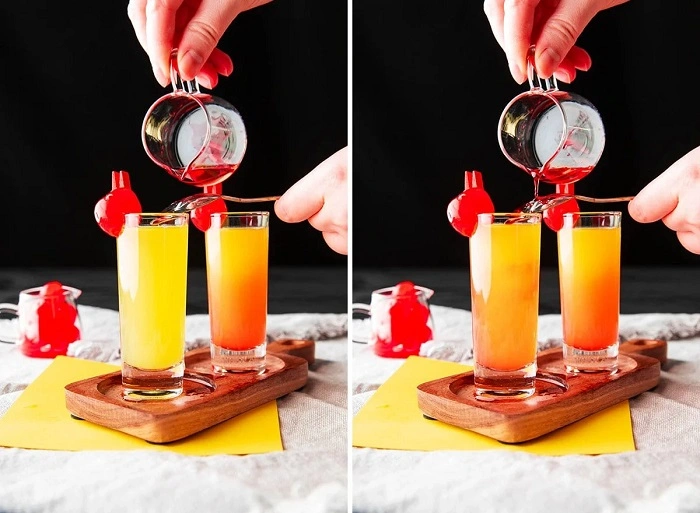
- 75 grams pineapple upside down cake
- 1 tablespoon warm water
- ½ teaspoon vodka or neutral spirit
- Coffee filter or fine sieve
- Chilled serving glass
Steps
- Break the cake apart until bits are tiny, roughly the same size.
- Start by combining warm water with vodka.
- Give it a single stir.
- Leave it for five minutes.
- Stir once more.
- Let the mixture filter slowly through a coffee filter or sieve.
- Place the liquid in the refrigerator for about fifteen minutes.
- Serve immediately.
What Happens After Resting Overnight
Wait. Leave the strained mix alone overnight, shut tight in a jar. Taste blends better, just a bit. At first it splits – little oil blobs climb up – but wait twelve hours.
Trace butter fats help things hold together, sort of. Still not clean. Always a little messy by morning.
Some flavors settle. Others soften. Nothing becomes perfectly smooth, but the pieces start working together more naturally.
Why People Keep Trying It
Who really likes this odd trend remains a mystery. Responses are few. Zero scientific papers dig into taste. Web talk sticks to themed gatherings or drink tinkering. Many drop it fast – after just one round.
Even so, the moment shows a truth: taste gets filtered through what we remember. Not “cake” pops into mind when you sip. Instead, it’s “this feels like…” From there, your past pieces things together.
This mental stitching matters more than molecules in that instant.
True, you can do it. It works on paper. Hardly useful in real life. Feels like testing an idea, not following steps. Less solid, more like a whisper.
Start with nothing on top. Skip the ceremony entirely. See what shows up once order falls apart. Sometimes the memory of a dessert lingers longer than the dessert itself.