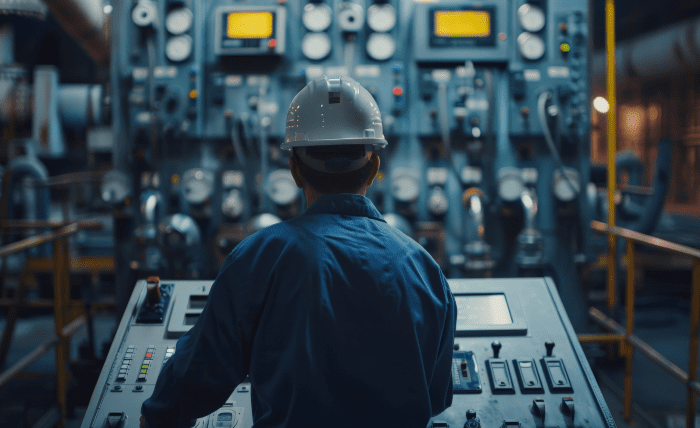

Advanced control systems have come up as the basis of modern industrial operations, changing how businesses manage equipment performance, reliability, and efficiency. As manufacturing and processing industries face increasing pressure to optimize productivity while reducing operational costs, the integration of control technologies has become essential for maintaining competitive advantage.
Table of Contents
1. Enhancing Operational Efficiency with Advanced Control Systems
The implementation of control systems, including Programmable Logic Controllers (PLCs) and Distributed Control Systems (DCS), enables precise monitoring and regulation of equipment performance across diverse industrial applications. These systems facilitate real-time adjustments that lead to improved efficiency and reductions in energy consumption, with many facilities reporting energy savings of 15-30% following system upgrades. PLCs excel in discrete manufacturing environments where rapid response times and precise control sequences are essential. These systems can process thousands of input signals per second, enabling split-second decisions that optimize production line performance. DCS technology, conversely, provides superior performance in continuous process industries such as chemical manufacturing, oil refining, and power generation, where maintaining stable operating conditions is paramount. Recent industry analysis indicates that businesses implementing advanced control systems experience average productivity improvements of 20-25% within the first year of deployment.
2. Predictive Maintenance: Anticipating Issues Before They Arise
Predictive maintenance is one of the most important advances in equipment management, leveraging data analytics and sensor technology to forecast equipment failures before they occur. By analyzing trends and anomalies in equipment data, businesses can schedule maintenance proactively, minimizing unplanned downtime and extending equipment lifespan. Industry research reveals that median unplanned downtime costs approximately $125,000 per hour across eleven major industries, making the prevention of unexpected failures a critical business imperative. Predictive maintenance systems use various sensor technologies, including vibration analysis, thermal imaging, and oil analysis, to monitor equipment health continuously. Advanced algorithms process this data to identify patterns that indicate potential failures, often weeks or months before problems become critical. This approach allows maintenance teams to order parts in advance, schedule repairs during planned downtime, and avoid the cascading effects of unexpected equipment failures.
3. Improving Safety and Compliance through Automated Controls
Automated control systems improve safety by continuously monitoring equipment for abnormal conditions and initiating corrective actions when necessary. These systems provide multiple layers of protection, from basic safety interlocks to sophisticated emergency shutdown systems that can respond to dangerous conditions within milliseconds. Modern safety systems incorporate redundant monitoring and control elements to guarantee a reliable operation even in the event of component failures. Safety instrumented systems (SIS) follow rigorous design standards that specify requirements for reliability, testing frequencies, and failure response times. These systems often achieve safety integrity levels (SIL) that reduce the probability of dangerous failures to one in ten thousand or even one in one hundred thousand occurrences. Components such as rocker switches are important in manual overrides and emergency shutdowns, guaranteeing operator intervention capabilities when automated systems need human input or when manual control becomes necessary. These switches must meet stringent reliability and durability standards to function properly under emergency conditions.
4. Integrating Modern Control Systems with Legacy Equipment
The integration of modern control systems with existing equipment has great performance improvements without the need for complete facility overhauls. This allows businesses to modernize operations incrementally, lowering capital expenditure while minimizing operational disruption during upgrades. Retrofit projects typically focus on replacing outdated control panels, adding sensor networks, and implementing communication protocols that enable legacy equipment to interface with modern control systems. Gateway devices and protocol converters help communication between older equipment using proprietary communication methods and modern systems utilizing standard industrial protocols such as Ethernet/IP, Modbus, or OPC-UA. The economic benefits of incremental modernization often exceed those of complete system replacement, particularly when existing equipment remains mechanically sound.
Modern control systems change industrial operations by providing the tools necessary to optimize equipment performance, reduce maintenance costs, and guarantee safe, compliant operations. As technology continues advancing, the integration of artificial intelligence, predictive analytics, and advanced automation will further improve the capabilities of these systems, making them indispensable for businesses looking to maintain a competitive advantage in a demanding industrial landscape.