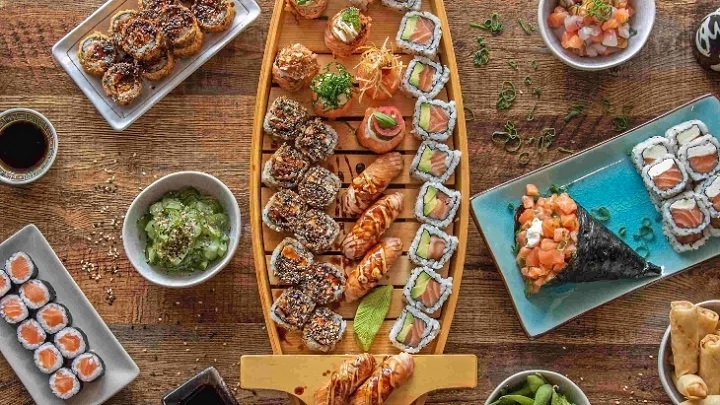

Most people do not see the financial strain behind endless sushi deals. Pay once, eat forever. That idea feels simple enough. Yet underneath sits careful shifts in fish freshness, smaller cuts, and subtle nudges guiding what guests choose to order. Hardly anyone thinks about how fixed prices warp ideas of flavor or where ingredients come from. When supply must match unlimited orders, even dishes built on timing and nature adapt. They are reshaped quietly by bulk needs.
Table of Contents
Why All You Can Eat Sushi Works Differently
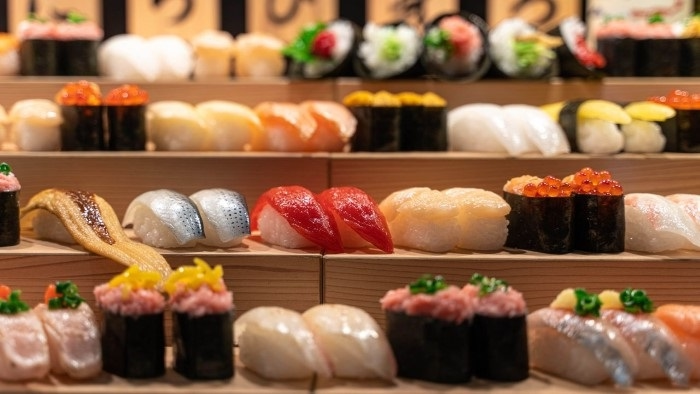
All you can eat sushi is not built like a high-end sushi meal. It has to work under a fixed price. That means every plate, roll, refill, and ingredient must fit into a cost system.
| Area | What Often Changes |
| Fish | More farmed or frozen seafood |
| Rice | Larger batches kept warm longer |
| Sauces | Stronger flavors used to cover flaws |
| Portions | Smaller cuts or controlled serving rounds |
| Menu | More rolls with fillers and processed items |
| Service | Slower refills during busy times |
The Fish Is Often Chosen for Cost and Supply
Most places with endless sushi don’t get their seafood through the same suppliers as fancy restaurants do. Instead of wild tuna, they often rely on farmed varieties. Salmon served there has likely been frozen. This is due to FDA rules aimed at killing parasites. That rule holds true everywhere, rich spots included. Yet how it thaws makes a difference. Serving quality shifts depending on whether the fish was rapidly unfrozen or warmed up slowly after storage. Repeated changes in cold exposure happen too much in bulk-service zones. Texture suffers quietly, even if health risks stay low.
Why Texture Changes Matter
Fish can still be safe but feel less fresh. That is the quiet difference many people miss.
- Soft fish may come from poor thawing.
- Watery slices may come from repeated cold shifts.
- Dull flavor may come from long storage.
- Uneven texture may show bulk handling.
Soy Sauce and Fake Wasabi Hide More Than You Think
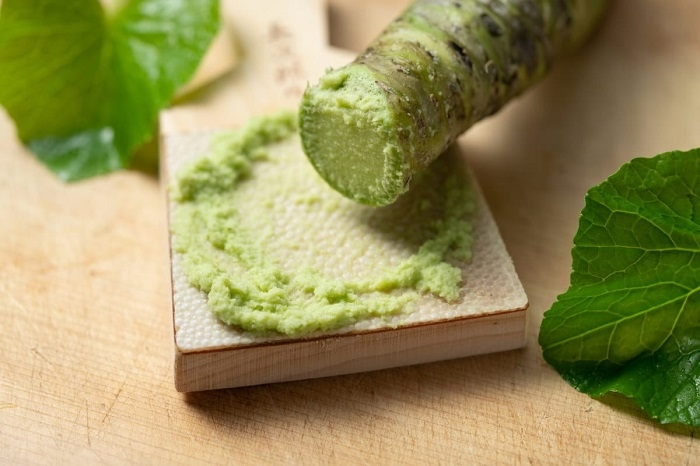
It isn’t just seasoning. Soy sauce does more heavy lifting than most realize. When cheaper spots serve rice or fish that taste a bit wrong, they douse it in flavored soy to cover the flaws. Certain restaurant chains push a syrupier version. It leans toward teriyaki rather than classic shōyu. This helps smooth out uneven quality between servings. The wasabi on your plate is frequently fake. It is often whipped together from horseradish, powdered mustard, and artificial coloring instead of real wasabi root.
Real Wasabi vs Common Wasabi
| Type | What It Usually Contains | Taste and Quality |
| Real wasabi | Wasabia japonica root | Fresh, sharp, delicate |
| Common wasabi paste | Horseradish, mustard, coloring | Strong, simple, cheaper |
Fresh wasabi grows slowly over three years in chilly, flowing streams. You won’t find it beyond select dining spots.
Sushi Rice Can Make You Full Faster
Look closely at the rice. When made right, sushi rice mixes vinegar, sugar, and salt just enough to match the fish when served warm. Many places keep large batches heated too long instead. This dries them out slowly. Grains turn stiff without warning. Feel changes each time, bit by bit. Some kitchens tweak ingredient amounts to avoid sticky textures, yet too much sugar sneaks in. A sharp sweetness lingers past the first few bites, turning heavy on the tongue. Fullness creeps in early, though it is not hunger that fades. It is taste nerves stepping back. Each mouthful grows harder to finish, not due to portion size, just tired receptors.
The “Unlimited” Part Often Has Quiet Limits
Some spots serve big portions without saying so outright. Though they call it all-you-can-eat, limits quietly apply. Five pieces now, then you wait. That keeps coming up. After that first set, the kitchen slows down on purpose. Busy times mean fewer refills, even if the menu says otherwise. Tables get watched closely when things get hectic. Out of nowhere, these rules take form. They are not always written down, but built through daily work.
Common Quiet Limits
- Smaller first rounds
- Slower refill timing
- More rice-heavy pieces
- More rolls than nigiri
- Longer waits during rush hours
- Careful watching of high-order tables
Too Much Choice Changes How People Eat
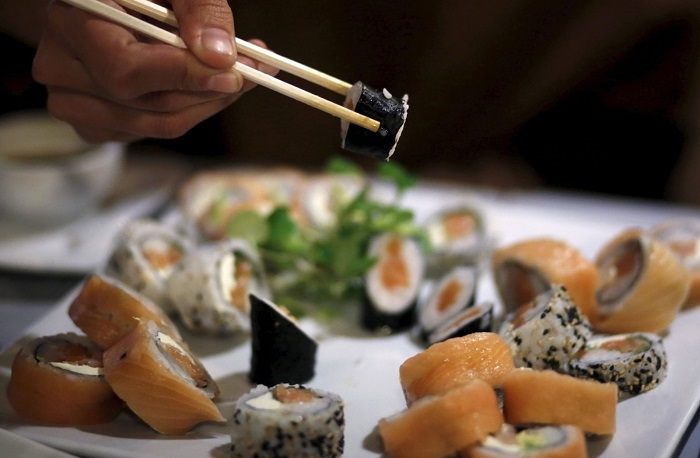
Something happens inside customers when there is too much choice. Research into how folks eat at buffets reveals a pattern. People pick different things and skip what they truly enjoy, all because the price stays fixed. Sushi becomes an experiment. Each roll gets sampled once. Curiosity drives picks more than flavor does. Trays go back to the counter again and again, carrying raw slices that were supposed to be eaten fast. The risk here is not only about germs spreading. It is scents moving around instead. Smells jump from piece to piece, changing how each one seems by the time someone bites.
Fake Crab Is Everywhere
Most people do not notice fake crab shows up almost everywhere in sushi spots. Because it holds up well, lasts longer, and costs less than real white fish, surimi fills menus widely. Machines shred pollock after removing bones. Then starch and artificial flavors are blended in before shaping the mix. The result gets colored red on top, stretched into sticks, and formed to look familiar.
| Item | What It Really Means |
| Crab stick | Usually surimi |
| Surimi | Processed fish paste |
| Main fish used | Often pollock |
| Main benefit | Cheap, stable, easy to use |
What ends up on plates shares almost nothing with true crab except appearance. Over time, this version shapes how new eaters expect seafood to taste. Younger crowds often think this processed item is how crab should be.
Fast Work Affects the Final Plate
Tight schedules shape how things turn out. Making rolls fast means moving quickly, nonstop. Training often comes from on-the-job practice instead of schools. Newcomers start shaping rolls soon after arriving. When hundreds must be ready each night, sharp techniques slip. Pressure chips away at precision over time. One slice might carry too much grain, leaving flavor behind. When pieces differ like that, what lands on the plate shifts each time. Sometimes it is a mouthful of starch. Sometimes almost none. Most never catch it unless they’re looking closely. But the pattern slips little by little. The mix changes without warning.
The Environmental Cost Is Often Hidden
Hidden environmental tolls slip under the radar. From muddy ponds in Southeast Asia, shrimp for tempura rolls arrive after forests vanish. Avocados may seem green, but they pull heavily on thirsty lands such as Michoacán, Mexico. When menus stretch endlessly, cravings grow. They echo far into farming systems worldwide, feeding habits that drain more than they show. Each bite tugs a thread tied deep in distant soil.
Sustainability Labels Do Not Tell the Whole Story
A few spots talk about being sustainable. They point to tags like “responsibly sourced.” Yet labels such as MSC, or Marine Stewardship Council, mostly cover ocean-caught fish. They do not always cover the farm-raised kinds filling most plates. Beyond national borders, details on where seafood truly comes from rarely surface through supply chains. Just because something can be traced does not mean it is clear.
Better Choices at All You Can Eat Sushi
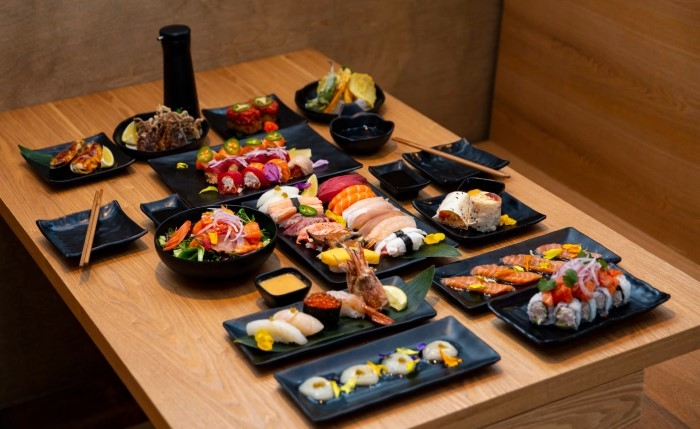
Even so, some choices help lessen your effect. Instead of fancy rolls, picking basic nigiri means fewer processed parts. Go for veggie or egg pieces. That eases pressure on ocean life. When you hold back on reordering, chefs get space to keep things consistent. Nothing promises top-tier outcomes. But paying attention changes how you take part.
Smarter Ordering Tips
- Choose simple nigiri when possible.
- Try egg or vegetable sushi.
- Avoid ordering too much at once.
- Eat what you order.
- Notice the rice texture and fish smell.
- Do not rely only on sauce for flavor.
- Pick fewer processed rolls.
FAQs About All You Can Eat Sushi
Is all you can eat sushi bad?
Not always. It can still be enjoyable, but it often uses cost-saving methods.
Is the fish at all you can eat sushi fresh?
It can be safe, but the texture and flavor may change because of freezing, thawing, and bulk storage.
Why does all you can eat sushi make you full fast?
The rice may be sweeter, heavier, or served in larger amounts, which can make you feel full sooner.
Is fake crab real crab?
No. Fake crab is usually surimi, made from processed fish paste.
What is the best thing to order at all you can eat sushi?
Simple nigiri, egg sushi, and vegetable options are often better choices than heavy processed rolls.
Eating cheap isn’t a sin. What’s available plays a big role. Yet understanding helps just as much. Endless sushi doesn’t honor culture in the same way a careful sushi meal does. It answers cold cost math instead. Taste bends to budget. Pleasure still shows up, true enough. Though it slips in sideways, shaped by trade-offs you rarely notice. It hides in each tweaked ingredient, every warmed-over piece, and choices settled long before your meal appears.