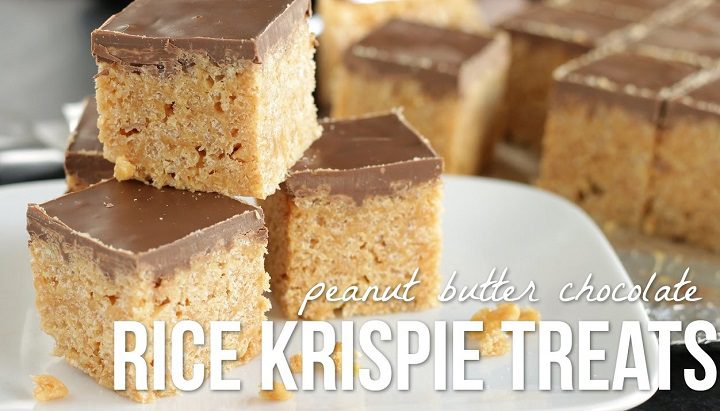

Some folks see peanut butter rice crispy treats as nothing special – just a quick fix for school events or last-minute guests. Marshmallows heat up, blend with nutty paste, that mix tumbles into airy grains. Standard version. Rarely examined. But beneath? A silent dance of forces, unseen rules guiding cling, flow, snap. Baking isn’t just dumping stuff together – it responds when you shift ratios. Fire transforms every element. The seconds on the clock decide softness. What looks basic hides layers of nuance.
Table of Contents
Simple Ingredients
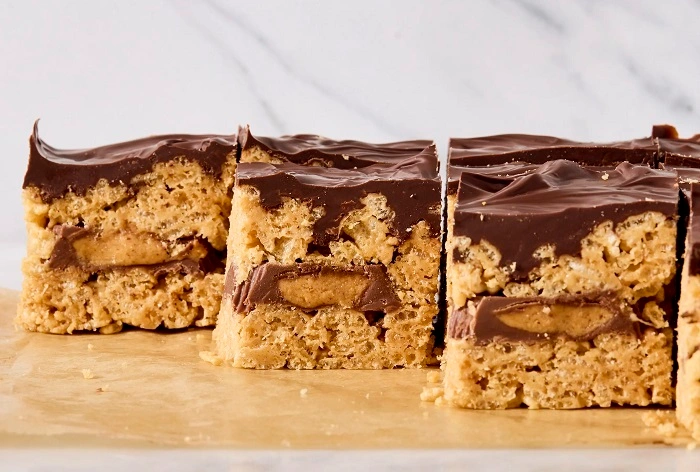
| Ingredient | Purpose |
| Rice crispy cereal | Adds crunch and structure |
| Marshmallows | Holds the mixture together |
| Peanut butter | Adds flavor, fat, and softness |
| Butter, optional | Helps melt and smooth the base |
| Salt, optional | Balances sweetness |
| Chocolate, optional | Adds a sweet topping |
What Holds Peanut Butter Rice Crispy Treats Together?
What holds it together? Two things work together: marshmallows and peanut butter.
When warmth hits the marshmallow, it turns gooey. Inside are sugar, corn syrup, gelatin, and water. They shift from firm to thick fluid at about 98°F, or 37°C.
As that heat builds, tiny air pockets made earlier start shrinking, so the mix gets denser. Too much heat pulls out too much wetness. That leaves behind something tough or chewy like old leather.
Heat that is too low means the mix stays loose. Getting it just right leans heavier on timing than warmth. Usually, around four minutes of cooking at a gentle setting does the job.
Why Peanut Butter Changes the Texture
Most times, peanut butter changes how something tastes along with its feel when eaten.
Because it holds quite a bit of fat, often around half in store-bought types, it softens hardened marshmallows just enough.
Skip it, and the result chews like sticky candy that won’t quit. Go heavy, and things get oily, falling apart at light pressure.
The kind without stabilizers splits on its own. Stir it poorly, and extra oil leaks out as it cools. That oil may pool under the cereal if heat was not used to blend it well.
Basic Peanut Butter Rice Crispy Treats Method
Ingredients
- Rice crispy cereal
- Marshmallows
- Peanut butter
- Optional butter
- Optional salt
- Optional chocolate drizzle
Steps
- Grease or line a pan with parchment paper.
- Warm marshmallows gently until soft and gooey.
- Stir in peanut butter until smooth.
- Add rice crispy cereal.
- Fold gently until coated.
- Press into the pan without crushing too hard.
- Let cool for about 30 minutes.
- Slice with a sharp knife.
Why Rice Crispy Cereal Stays Crunchy
Crunch comes from Rice Krispies, yet there is more going on inside.
Pressure-cooked mixtures of rice flour and water get pushed through shaped openings. Tiny shapes puff when pressure drops fast. Steam trapped in the dough bursts outward, making them light and crisp.
That sharp texture does not last long near wet ingredients. Moisture creeps into spots where glue-like substances touch the cereal.
Some parts soak it up faster. Others resist longer. Outer pieces keep their crackle. Deeper ones turn tender sooner.
Bite changes depending on position. Uneven softening shows up every time. Not broken. Just built that way.
Preparing the Pan
Most folks miss the way you prepare the skillet.
People often pack the mix straight into a pan lined only with parchment. Yet the grease left behind by peanut butter tends to stop it from clinging too hard. Sometimes that slick film does most of the work on its own.
Parchment beats foil every time. A slight roughness on its surface holds tight to the edges, keeping pieces intact once cut.
Slipping free isn’t hard for silicone baking mats, yet dampness hides under their smooth face. This hidden wet spot pulls one section down even as another swells upward.
Cooling and Cutting
Thirty minutes of cooling helps the base hold its shape when sliced.
A short wait, just ten minutes, leaves it soft in places. That leads to jagged edges.
Sharp separation happens only once firmness sets in fully. Wiped clean after each pass, a chef’s blade outperforms flimsy plastic ones.
Even heated slightly, weak knives struggle. Crumbles appear more often when pressure is not evenly applied.
Also Read: High Protein Mac and Cheese Recipe
Easy Add-Ins and Toppings
Drizzling chocolate shows up now and then. A pinch more salt sometimes joins in. Honey slips into a few versions too.
Instead of all marshmallows, some toss in powdered sugar to cut the sweet edge. Crushed pretzels crunch through certain batches. Cinnamon swirls appear here and there.
These tweaks do not alter how things stick together. They just pile on top.
What matters most is how hot it gets at first and how fast it all stirs.
Add-In Ideas
- Chocolate drizzle
- Crushed pretzels
- A pinch of salt
- Cinnamon
- Honey
- Mini chocolate chips
- Powdered sugar
- Chopped peanuts
Regular vs Natural Peanut Butter
Most jars of peanut butter are not made the same way.
Regular kinds sit on shelves for ages thanks to hydrogenated fats and extra sweetness. Those elements also make the spread thicker.
Natural peanut butter is different. Oil drifts upward soon after stirring. That shift means once everything is blended, it must move straight into the dish without pause.
Wait even a little, and the mixture can split apart.
| Peanut Butter Type | Result |
| Regular peanut butter | Thicker and more stable |
| Natural peanut butter | Can split if not mixed well |
| Crunchy peanut butter | Adds texture |
| Creamy peanut butter | Gives smoother bars |
How to Store Peanut Butter Rice Crispy Treats
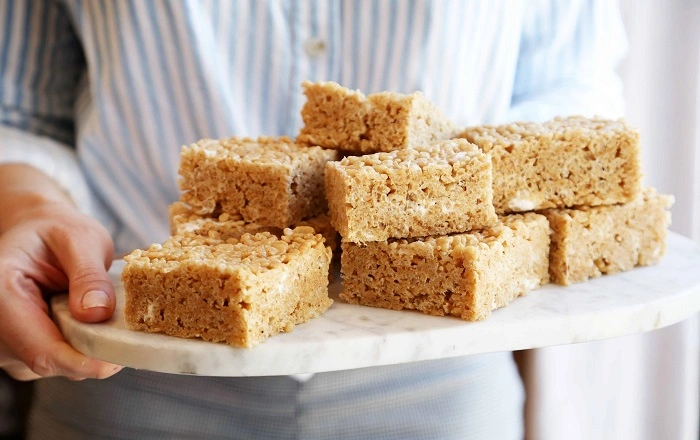
Left outside without cover, many struggle to stay crisp. Humidity creeps in once they’re open to air, making each piece harden well before noon.
Freshness holds up close to seven days when tucked inside a firm jar out on the shelf.
Frozen storage keeps things fresh longer, yet texture grows heavy. Waiting through thaw brings back some give – just expect a slow shift.
Common Mistakes to Avoid
| Mistake | What Happens |
| Heating too long | Bars turn tough |
| Using too much peanut butter | Bars become oily |
| Pressing too hard | Cereal gets crushed |
| Cutting too soon | Edges turn messy |
| Leaving uncovered | Texture goes stale |
| Waiting too long with natural peanut butter | Mixture may split |
Why Small Details Matter
Even though it looks simple, tiny changes can really alter how it turns out.
When heated low and mixed without pause, it follows the rules, just barely. Skip a beat, and the sticky grip versus the crunchy edge starts to fall apart.
The magic vanishes if you push too fast. When pieces are tiny, folks see them as bites. Bigger ones feel like a treat. Bite into a square, and pressure spreads fairly across your teeth.
Odd-shaped bits crack in strange ways, shifting how your mouth feels each chunk.
(FAQs) About Peanut Butter Rice Crispy Treats Recipe
What makes peanut butter rice crispy treats stick together ?
Marshmallows and peanut butter work together to bind the cereal.
Why are my rice crispy treats hard ?
They may have been heated too long or pressed too firmly into the pan.
Can I use natural peanut butter ?
Yes, but stir it very well and move the mixture into the pan quickly.
How long should they cool before cutting ?
About 30 minutes gives cleaner slices.
Can I freeze peanut butter rice crispy treats ?
Yes, but the texture may become denser after freezing.
Final Thoughts
This isn’t just putting things together. Heat changes form while parts choose how to react.
Because time controls how it all holds, what looks like instinct is really physics wearing a common face.
Watch closely and the process shifts from habit to something aware. Not because of rules, but through noticing moments: flow thickens, mix loses its drag, and texture starts to hold.
It just sits there plain. Nothing extra to add. Works exactly as it should.
Still around, since it does what it should. The steady kind of strength comes from plain facts, nothing flashy about it. This calm usefulness could be the part people remember.