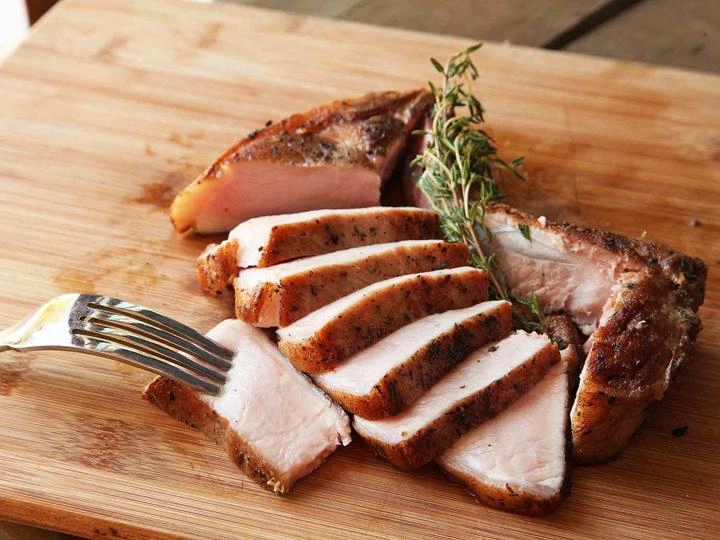

Most pork chops keep the bone, yet taste tough when cooked wrong. It’s never the meat itself – timing trips people up every time. Heat moves differently around that rib piece – it blocks, slows, shifts. Skip accounting for it, treat it like bone-free cuts, and edges turn rubbery by the middle. Sear first, toss in the oven? Strategy crumbles more times than not.
Most seasoned chefs still forget that food keeps cooking once off the stove. Because heat lingers inside, temperatures climb another 5 to 10 degrees. That extra rise can take a perfect pork loin past 145 and turn it chewy. Quiet moments after cooking do most of the damage.
Table of Contents
Bone In Pork Chop Quick Facts
| Detail | Information |
| Best Cut | Center-cut rib chop |
| Ideal Thickness | 1 to 1¼ inches |
| Resting Before Cooking | 30 minutes |
| Target Temp Before Resting | 135°F |
| Final Safe Temp | 145°F |
| Resting After Cooking | 7 minutes |
Choosing the Right Pork Chop
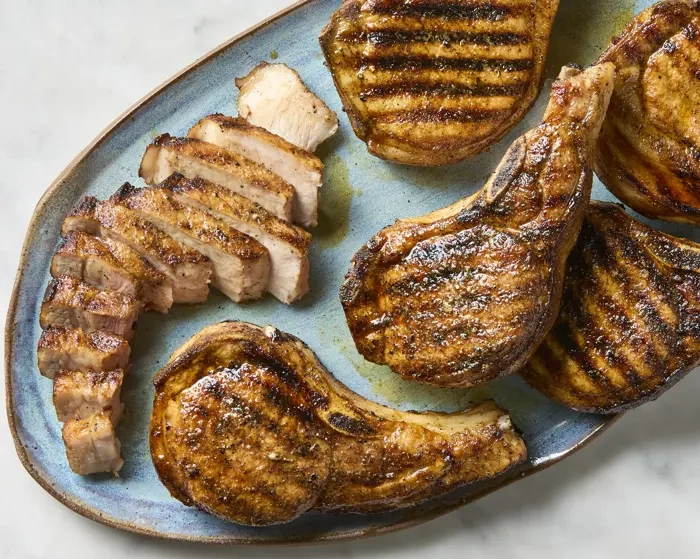
Pick a good piece first. Go for center-cut rib chops, thickness between one inch and an inch and a quarter. They’re taken from the top part of the pig’s back, close to where loin joins shoulder.
Some stores call them “ribeye pork chops” when you see flecks of fat around the edge. Nice to have, though even texture beats flashy marbling every time. Start firm, not floppy – pressure shows what age hides.
Too thin means quick drying, a weak base for heat. Skip those sealed packs sitting past five days. Time dulls their bounce. Texture talks louder than how long it aged. Press once: if it gives like wet paper, walk away.
What to Look For
- Center-cut rib chop
- Firm texture
- Even thickness
- Fresh appearance
- Around 1 to 1¼ inches thick
Preparing the Pork Chop
Thirty minutes prior to cooking, take the pork out of the fridge. When meat is cold, its fibers tend to seize up once heated, squeezing out juices in patches.
Meat closer to room temperature handles heat with less surprise. Dab it dry using a paper towel. Water on the surface stops food from browning. When it heats up, it becomes steam.
That means steaming happens, not searing.
| Preparation Step | Why It Matters |
| Remove from fridge | More even cooking |
| Pat dry | Better browning |
| Use paper towels | Removes surface moisture |
| Rest 30 minutes | Less temperature shock |
Cooking the Pork Chop
A heavy pan works best – try cast iron or carbon steel. Two minutes on medium-high heat gets it ready.
Sunflower, avocado, or refined peanut oil fits here because they handle heat well. Half a teaspoon spreads across the bottom when tipped gently. Only when the oil ripples softly should you proceed.
Lower the cut of meat slowly, skin facing downward whenever it works. Let it sit without touching. Three full minutes pass like that. Turn it just one time.
The idea that sealing keeps moisture locked inside? That story sticks around, yet what really matters is heat level, not whether a browned surface appears.
Best Cooking Equipment
| Equipment | Purpose |
| Cast Iron Pan | Holds heat evenly |
| Carbon Steel Pan | Fast temperature control |
| Digital Thermometer | Accurate readings |
| Wire Rack | Better resting |
| Wooden Spoon | Pan sauce |
Checking Internal Temperature
Once it’s flipped, turn the burner lower. Three more minutes pass before anything changes.
Now comes the moment to test warmth inside. Slide a digital thermometer sideways through the edge, pointing at the densest zone, steer clear of any bone.
When the reading hits 135°F, take the skillet off the flame. Move the cut onto a metal grid above a dish.
This pause does far more than just sit still. Heat moving inside makes proteins tighten further. Because of capillary forces in the tissue, juices shift around.
Wait at least seven full minutes before cutting.
Making a Simple Pan Sauce
Resting now? That’s when you lift the pan off high heat.
Tip out extra grease but keep those rich, dark bits stuck below. A quarter cup of liquid goes in next. Broth works, chicken or veggie both fine, with a teaspoon of apple cider vinegar tagging along.
Grab your wooden spoon and drag it across the base, loosening every bit. Let it bubble gently for exactly one minute.
Finish with a swirl of cold butter, just half a spoonful, if you want a soft gloss.
| Sauce Ingredient | Amount |
| Broth | ¼ cup |
| Apple Cider Vinegar | 1 tsp |
| Cold Butter | ½ tbsp |
Seasoning Tips
Start with just a little salt. Try timing it right. Sprinkle on kosher salt about forty minutes before heating begins.
Skip the pepper for now. It turns bitter when burned. Wait until cooking finishes, maybe even wait till serving, then add cracked black pepper.
Others might push sweet rubs, green pastes, wet soaks. They pull flavor off track. Most pigs today carry a quiet sweet note in their flesh.
Too much spice doesn’t lift the flavor. It buries it.
Simple Seasoning List
- Kosher salt
- Cracked black pepper
- No sweet rubs
- No heavy marinades
- No overpowering spices
Does the Bone Make It Juicier?
Just because there’s a bone inside doesn’t mean the meat bastes itself. Juices aren’t stored in bones, nor do they travel into surrounding flesh while heating up.
Instead, bone heats more slowly compared to muscle tissue, which can slightly delay temperature rise nearby.
Helpful? A little. Yet barely noticeable.
Counting on it to make meat tender is not going to work.
Oven vs Stovetop
Heat from an oven feels like a safe bet. Yet tiny shifts mess up results.
Inside most home units, temperatures jump around unpredictably. Even convection fans push warmth in lopsided bursts.
The space between pan and rack alters how food cooks. On the stove, adjustments happen quicker and reactions are sharper.
When choosing oven use anyway, wait until it hits precisely 375°F before starting. Then allow no more than four minutes post-searing.
Why a Thermometer Matters
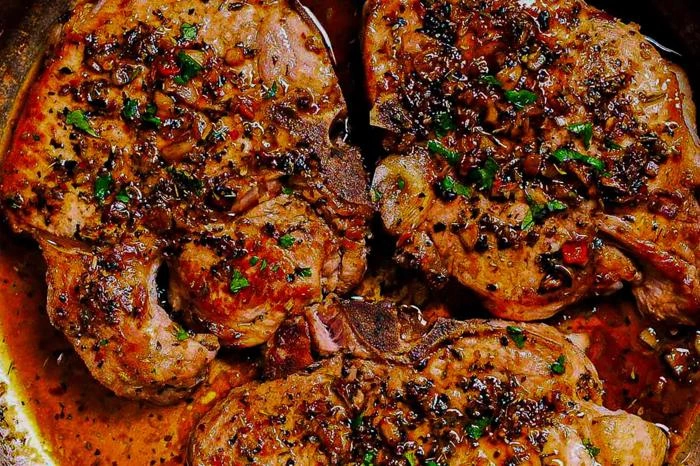
Most folks think they know when meat is done. Truth? A precise reading beats guessing every time.
The official advice says 145°F, then wait exactly three minutes before cutting. Scientists arrived at that number after testing how heat kills harmful bugs like Salmonella and Trichinella.
Also Read: Chocolate Chip Cookie Recipe Small Batch: A Tiny Bake for One Quiet Moment
Tools matter. A digital thermometer shows what your eyes cannot.
| Temperature | Result |
| 135°F | Remove from heat |
| 140°F | Carryover cooking begins |
| 145°F | Recommended final temperature |
| 150°F+ | Higher chance of dryness |
Resting and Serving
Heat lingers under a loose foil cover, just enough to matter if cold air sneaks across the counter. Wrap it tight and those rich scents escape easily. A wire grid keeps the bottom side sharp, never limp.
Set it straight on a dish and that crunch fades fast. Start with a bite of plain meat. Texture shifts appear. One part smooth like silk, another tougher near the rim where fat clings.
Each tiny stretch along the cut feels different under the teeth.
Leftovers
Most leftovers lose quality when warmed again. Protein breaks down fast in the microwave. Fresh is always better here.
Slices of yesterday’s cut work well in broth-based dishes. Steam keeps them tender.
Common Things That Affect Results
- Humidity
- Altitude
- Burner differences
- Chop thickness
- Pan material
- Resting time
Most cuts still come out uneven when using this approach. Things like moisture in the air, how high you are above sea level, even differences between burners – each throws a wrench.
Still, nailing down what you can manage lifts your chances by quite a bit.
A dish changes not by one magic item. It shifts because of how it’s made. What matters is doing the work again, each time watching closely, instead of chasing new tricks.