
Definitions of some dishes are by what they are not.
They are not over boiled.
They are not complex.
They are not heavy.
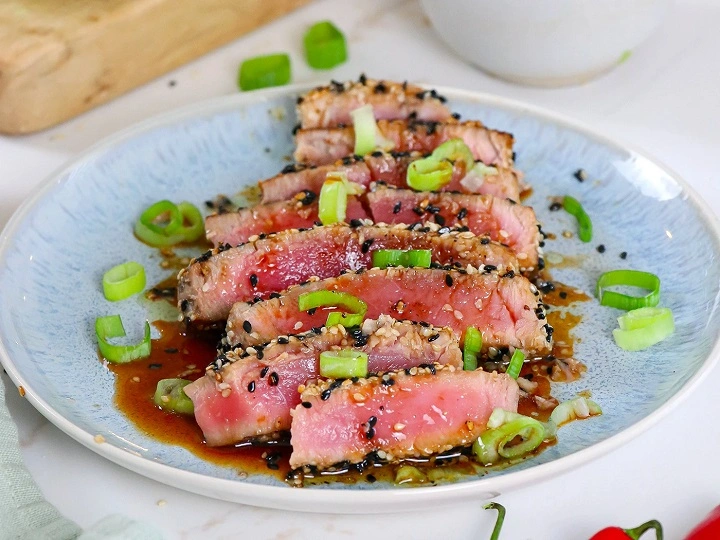
Ahi tuna that is seared is one of such dishes.
It is fast, clean and conscious. Even a little heat works changes the exterior, but leaves the interior cool, soft, and practically unchanged. It is the contrast that is purposeful, graceful and very satisfying.
This is no mere cooking.
It is timing.
It is control.
When enough is enough is knowing.
Table of Contents
The Idea Behind Seared Ahi Tuna
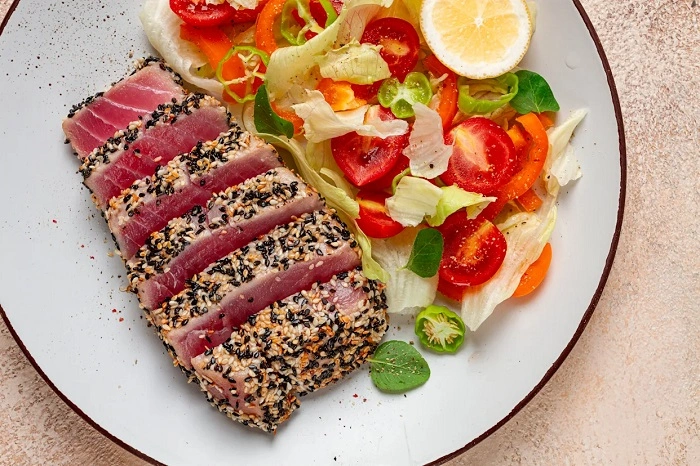
Fundamentally, ahi tuna that is seared is all about restraint.
This is a dish that requests less, but requires more, unlike many dishes, which depend on a lengthy time to cook. High heat is applied to the tuna in a brief period forming a delicious crust, and keeping the natural texture intact on the inside.
The fish is tender, and has a clean, faint in richness taste. It is not aimed at covering it, but emphasizing it.
Seasoning enhances.
Heat transforms.
Timing defines.
That is what it all means.
A Recipe Made to impress.
The simplicity of this recipe is what is unique about it, but at the same time the way sophisticated the outcome seems. All you need is some few ingredients and you can make something that will be restaurant quality.
Ingredients
- 2 tuna steaks (sushi grade)
- 2 tablespoons soy sauce
- 1 tablespoon sesame oil
- 1 tablespoon olive oil
- 1 Tablespoon sesame seeds (optional)
- 1 teaspoon black pepper
- ½ teaspoon salt
Optional: green onions, sliced or lemon squeezer.
How to Prepare It
Begin by drying off the tuna steaks. This aids in the accomplishment of a clean sear and additional moisture does not disrupt the crust.
Sprinkle the tuna lightly with soy sauce and sesame oil. Salt, pepper, sesame seeds: Sprinkle with salt, pepper and sesame seeds (where applicable). Seasoning it into the surface with your fingers is important so that it is evenly applied.
Heat a pan in high heat making it very hot. Add olive oil, allowing it to shimmer.
Put the tuna in the pan, and sear about 30-60 seconds on each side. An outer layer of thin, golden crust, and an interior that is rare should form.
Take out of the pan and allow to cool down a little.
Cut across grain into small slices and serve.
The outcome is bright, crisp and contrasting.
The Feel and Taste.
Searing ahi tuna is beautiful due to its texture.
The outer bark is a little brittle, and has a savoury, experienced crust. The inside of the tuna is soft, smooth and almost buttery.
It is light but full-bodied.
Soy sauce is added to add flavor.
Sesame oil has a warming effect.
The very tuna is imbued with a natural sweetness, which is in the middle of every bite.
It is proportional and exquisite.
There is nothing that is out of place.
A Meal That Seems Deliberate.
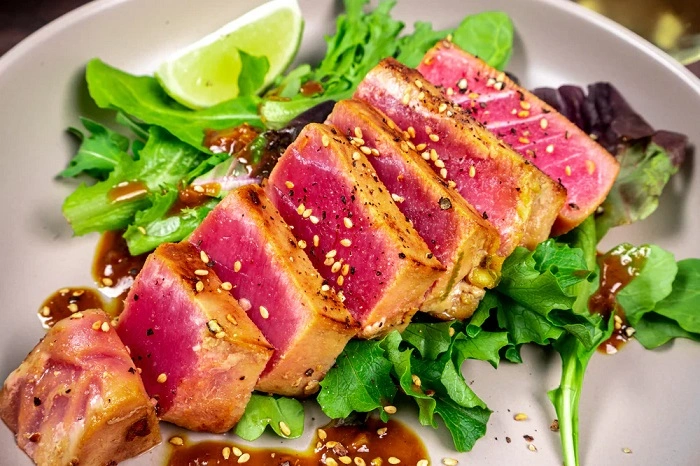
Ahi tuna (seared) is not a fast food.
It begs to be noticed yet it does not take long to make up, just a few minutes. This heat should be correct. It should be at the right time. The treatment should be tender.
It sets up a scene in the kitchen.
You watch closely.
You wait and hear the sizzle.
You come around at the opportune moment.
And all is over.
This is one of its attractions.
Custom to Your Taste.
This meal is the most versatile.
To make it more spicy, you can sprinkle it with a crust of spices, chili flakes or wasabi powder. Citrus drizzles can be used to lighten the flavor, and a dipping sauce can be used to provide additional flavor.
Even the doneness degree can be altered a bit, by whim, but it is traditionally cooked in the middle as rare as possible.
The variations make the experience a little different.
Still it is based on the same.
Quality is Important.
This being a very simple dish, the quality of tuna is of great importance.
Sushi grade fish is safe and has optimum texture. It is important to be fresh–it influences taste and looks.
Oil, seasoning and the right amount of heat are all good matters that lead to the end result.
Complexity is no cover up here.
All of the elements are visible.
Why People Continue to Come Back.
Seared ahi tuna is something that is memorable.
It could be the dissimilarity between the surface and the core.
It could have a fresh and clean taste.
Or it may be the simplicity of the dish, well done.
It is light, but satisfactory.
Elegant, yet approachable.
And a combination like that, keeps people returning.
The Minimalist Cooking.
Over the last few years, there has been an increasing appreciation of foods that have made emphasis on simplicity and quality.
Individuals are attracted to dishes that feature ingredients as opposed to being too many. Ahi tuna, which is seared, works well in this strategy.
It is not concerning the addition.
It is doing no more than enough.
And doing it well.
Searching for ahi tuna is a message that does not always mean that excellent food preparation has to be intricate.
This can be done with few ingredients and a delicate hand to produce something that seems sophisticated, well balanced and highly pleasing.
It is fast yet considerate.
Simple, but elegant.
Light, but memorable.
The dishes that are aware of when to cease are sometimes the best.
and here is one of them.
FAQ
Is it okay to consume rare tuna?
Yes, provided that it is sushi-grade and handled.
Is it possible to cook it?
You may, but then it will have another texture and will not have its signature contrast.
What shall I give it with?
It goes well with rice, salad or slightly cooked vegetables.
Am I required to have sesame seeds?
They are a nice touch but also provide flavor and texture.
Is it possible to use another fish?
Yes, however, the cooking time and the texture can be changed.