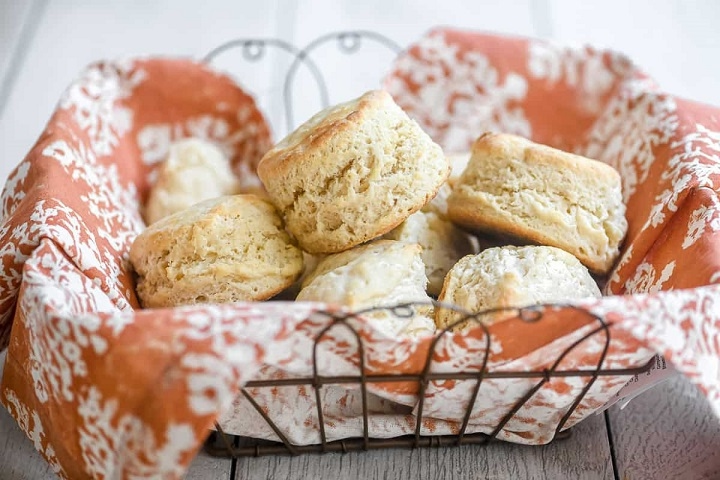

Sometimes you find biscuits built from only flour, baking powder, and milk. Not planned, really, more like what happens when cupboards empty out. Still, bare bones does not mean broken. It means different rules take hold. Remove butter, skip the egg, yet something holds together anyway. Absence here does not leave voids. It shapes a new form. Without that ingredient, baking powder steps in alongside extra moisture to lift and bind. Not trying to copy old-style Southern biscuits, this one reshapes what they can be by working within limits.
Table of Contents
Simple Ingredients
| Ingredient | Amount | Purpose |
| Flour | 2 cups | Builds the biscuit structure |
| Baking powder | 1 tablespoon | Helps the dough rise |
| Whole milk | ¾ cup | Adds moisture and helps bind |
How to Make 3 Ingredient Biscuits with Milk
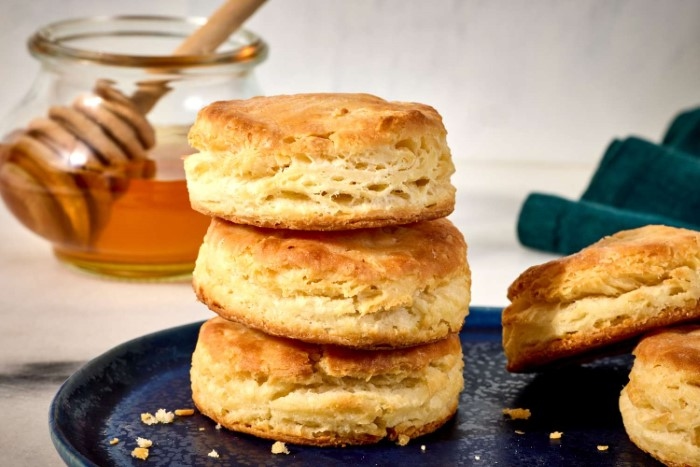
Out comes the flour. Two full cups go into the bowl. One tablespoon of baking powder joins next. A quick stir with a fork ties them together, nothing too thorough. Into that mix slips three-quarters of a cup of whole milk. Mix things up until it looks like messy dough. Too much mixing makes it hard when done. If you can, roll it into a round shape. Press it down so it is about half an inch high. Slice it into blocks or rounds, your choice. Heat at 450°F, that is 230°C, for 12 to 15 minutes. Stop once pale gold shows. Done. Just three parts involved. Only one container was needed. Few utensils required.
Quick Recipe Steps
- Add 2 cups flour to a bowl.
- Add 1 tablespoon baking powder.
- Stir lightly with a fork.
- Pour in ¾ cup whole milk.
- Mix until a rough dough forms.
- Press the dough to about ½ inch thick.
- Cut into rounds or blocks.
- Bake at 450°F for 12 to 15 minutes.
Why This Biscuit Recipe Works
Here’s how it happens. Inside baking powder sits an acid along with a base. Once wet, gas begins to rise without delay. Tiny pockets of air fill the webbing as it forms. Moisture comes from milk, along with a bit of protein that helps things brown through Maillard chemistry. Starch and early forms of gluten arrive thanks to flour. Without layered butter, flaky breaks cannot form. Uniformity takes over the crumb, soft in spots and tougher close to the outer edge.
Why High Heat Matters
Start with chilled butter, that is key for flaky layers when the oven heats up. But when there is no fat involved, rising hinges on how fast gases form. Bubbles need a push right at the beginning. Baking powder delivers that jolt. If things drag out, shape fails before it holds. Speed kills lift. That is why how hot the oven is matters so much. Starting hot lets the dough puff up fast, ahead of the proteins locking down. Big heat at first is not about taste. It keeps the shape holding together.
A Recipe Born from Shortages
Curiously, this approach echoes how kitchens changed during war years. Back then, shortages hit hard. Butter and eggs disappeared throughout Europe and parts of North America. Alternatives began showing up. British recipe leaflets featured scones using just milk. American farming guides shared alike fixes. Home cooks were not after nostalgia. They wanted meals that worked, even when supplies ran thin. Out here, reviving old recipes usually skips the backstory. Simplicity gets dressed up like a deliberate pick, not something people just had to do.
Why Milk Matters
Here, milk works because it does things, not because it means something. When mixed in, the liquid part spreads through the batter while helping bubbles form during rise. A touch of sugar from milk also helps the outer layer turn golden brown when heated. Using skim milk might get you a lighter color plus drier texture since there is less richness present. Plant-based kinds such as almond or oat often fall short unless extra nutrients have been added by makers. Without certain dairy proteins and enough dense components inside, they cannot hold everything together properly. Even though swapping ingredients might seem appealing, it throws off a carefully tuned system.
Milk Options and Results
| Milk Type | Likely Result |
| Whole milk | Best texture and browning |
| Skim milk | Drier and lighter biscuit |
| Almond milk | May not bind as well |
| Oat milk | Can work, but texture may change |
| Fortified plant milk | Better than thin plant milk |
Why You Should Bake the Dough Fast
Most of the time, how you store things shifts what happens later. If the blended dough sits too long without heat, it breaks down fast. As soon as baking powder meets milk, bubbles start forming. When baking waits too long, air fades away slowly. Stale hits fast when there is no fat inside. Moisture slips out sooner without fatty interference. Stiffness shows up before long after baking wraps up. Molecules of starch shift on their own, now that nothing blocks them. Heat revives texture a bit at first try. Yet full fluffiness never comes back again. The change stays permanent past the first few hours.
What These Biscuits Taste Like
Most of what you notice comes from how it feels, not how it tastes. The flavor stays quiet on purpose, almost empty. Without salt, some keep things down to three parts, stripping back just because they can. A few toss in a little anyway, settling at four when real life gets involved. Yet sticking hard to three shifts attention from flavor to structure. Crispness shows at the edges. Inside stays full of tiny holes. Gravy, soup, or jam get pulled in fast. A plain bite seems lacking. It is built to carry, never stand alone.
Best Ways to Serve Them
- With sausage gravy
- Beside soup
- With jam
- With honey
- With stew
- With butter, if you do not mind adding a fourth ingredient
- As a quick breakfast bread
Common Mistakes to Avoid
| Mistake | What Happens |
| Mixing too much | Biscuits turn hard |
| Letting dough sit too long | Baking powder loses lift |
| Baking too cool | Biscuits stay flat |
| Using very thin milk | Texture may turn dry |
| Waiting too long to eat | Biscuits stiffen fast |
Why Small Batches Work Better
Most times, scaling things up brings trouble. When you double the mix, spreading baking powder evenly gets harder. That uneven spread leads to spotty rising. Mixing by hand keeps batches small without question. Mechanical tools add far too much power, which overworks the flour. Because of that, factories struggle to take over. The whole method clings to home kitchens instead.
A Simple Recipe for Learning
Little ones might build these when someone watches. Each step fits how long they can pay attention. Some schools that still teach home economics slip them into class, using cups and timers to show what happens when things change. Less about making meals, more like hands-on experiments. Watch it mix, then heat, then shift. It tells you right away, clearer than most kitchen work ever does.
Why This Recipe Lasts
Out of nowhere, flour shows up again. Where supplies run low, this mix sticks around, not due to taste, just endurance. Think cracked sidewalks: something always pushes through. Baking powder helps, even when everything else vanishes. Milk stretches far, even in harsh spots. Places cut off, broken down, left behind, they keep using it because there is little choice. Not a design decision. More like necessity shaping what stays.
FAQs
What are the 3 ingredients in these biscuits ?
The three ingredients are flour, baking powder, and milk.
Can I make these biscuits without butter ?
Yes. This recipe skips butter and uses baking powder and milk to help the biscuits rise and hold together.
Why should I bake them at high heat ?
High heat helps the dough rise quickly before the structure sets.
Can I use skim milk ?
You can, but the biscuits may turn lighter, drier, and less rich.
Do these biscuits taste plain ?
Yes, they are mild. They work best with gravy, soup, jam, honey, or another topping.
Some things never shout. This one slips in without medals or speeches. Feeds happen anyway. Steady. Without lights. Without needing thanks.