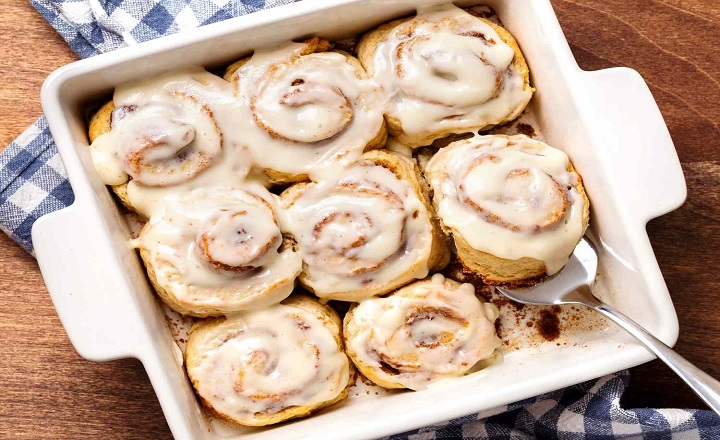

Baking usually follows set routines – yeast makes dough grow, while buttermilk adds a gentle sharpness and soft crumb. Still, taking those out shakes up tradition. Instead of loss, there’s change – guided by reactions hidden in ingredients. Without yeast or buttermilk, a cinnamon roll stops waiting for bubbles, begins trusting texture built another way. Dairy fades into the background, replaced by what sits quietly in your cupboard. Baking rises because of minerals, not tiny living things. Bubbles form when baking soda meets sourness, usually from buttermilk. Since that won’t work here, vinegar steps in. A quick swirl into milk creates a close copy of thickened dairy. Powder joins soda to boost rise without yeast’s help. Missing an ingredient doesn’t block progress – just nudges the path elsewhere.
Table of Contents
Cinnamon Roll Simple Ingredients
| Ingredient | Purpose |
| All-purpose flour | Forms the dough |
| White sugar | Adds sweetness |
| Brown sugar | Adds moisture and flavor |
| Baking powder | Creates rise |
| Baking soda | Works with acid for lift |
| Salt | Balances flavor |
| Butter | Adds richness |
| Milk | Provides moisture |
| Vinegar | Replaces buttermilk acidity |
| Cinnamon | Creates the classic filling |
Why These Rolls Rise Without Yeast
Baking rises because of minerals, not tiny living things. Bubbles form when baking soda meets sourness, usually from buttermilk. Since that won’t work here, vinegar steps in. A quick swirl into milk creates a close copy of thickened dairy. Powder joins soda to boost rise without yeast’s help. Without fermentation, the dough behaves differently. It does not spend hours building flavor. Instead, the rise happens quickly once ingredients come together.
Yeast vs No-Yeast Rolls
| Method | Result |
| Yeast Dough | Light and airy |
| Baking Powder Dough | Softer and heavier |
| Buttermilk Dough | Tangy flavor |
| Vinegar and Milk | Similar acidity |
Building the Dough
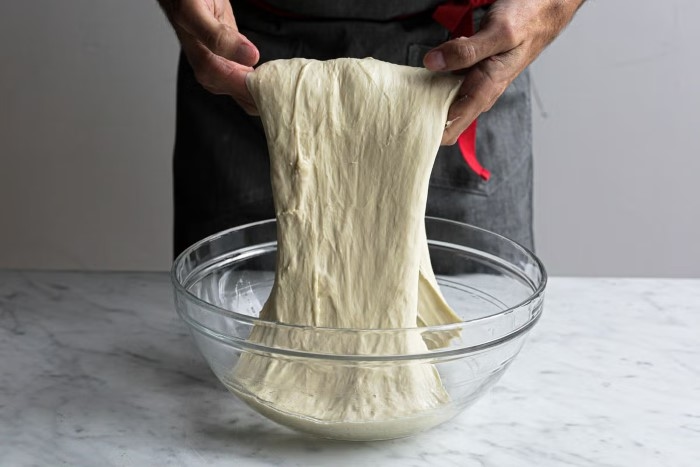
Start with flour – it holds everything together. All-purpose gets the job done, though bread flour makes things too stiff, cake flour too soft. Two cups land right. Sweetness comes twice: a third of white sugar upfront, brown sugar stepping in later to bring wet richness. For rise, count on baking powder – two full spoonfuls push upward. Baking soda steps in only once acid shows up, about half a teaspoon doing its part. A pinch of salt – no more than half a teaspoon – settles things without taking over. Bits of cold butter, roughly one-third cup diced tiny, mix in till the blend turns crumb-like. Getting that feel right holds weight. If too smooth, the mixture presses together too tight. When too chunky, gaps give way mid-bake.
Dough Ingredients
| Ingredient | Amount |
| All-purpose flour | 2 cups |
| White sugar | 1/3 cup |
| Baking powder | 2 teaspoons |
| Baking soda | 1/2 teaspoon |
| Salt | 1/2 teaspoon |
| Cold butter | 1/3 cup |
Making a Buttermilk Substitute
A bit less than a full cup of milk sits warming – just a touch warmer than the kitchen air. Into it goes a single spoonful of vinegar, no more. Clouds form softly once stirred, proof something shifts beneath. Wait sixty seconds while quiet changes take hold. Sour notes rise gently, mirroring what real buttermilk does. Tip this blend into flour and friends waiting nearby. Drag everything through brief chaos until rough patches appear, then push pieces to join hands. Most doughs bounce back, but this one stays flat. That is how it should be. Work it just one time, then fold two times, that is enough. Too much handling makes the gluten go too far, turning tender into tough.
Basic Cinnamon Roll Recipe No Yeast No Buttermilk Method
Ingredients
Dough
- 2 cups all-purpose flour
- 1/3 cup white sugar
- 2 teaspoons baking powder
- 1/2 teaspoon baking soda
- 1/2 teaspoon salt
- 1/3 cup cold butter
- Milk
- 1 tablespoon vinegar
Filling
- 3 tablespoons melted butter
- 2/3 cup brown sugar
- 2 teaspoons cinnamon
- Optional nutmeg
- Optional vanilla
Frosting
- 1 cup powdered sugar
- 2 teaspoons milk
- 1/4 teaspoon vanilla
Steps
- Combine the dry dough ingredients.
- Cut in the cold butter.
- Mix vinegar into the milk.
- Add the liquid to the flour mixture.
- Stir until a soft dough forms.
- Roll the dough to about 1/2 inch thick.
- Spread melted butter across the surface.
- Sprinkle with brown sugar and cinnamon.
- Roll tightly into a log.
- Chill for 30 minutes.
- Slice into 9 equal rolls.
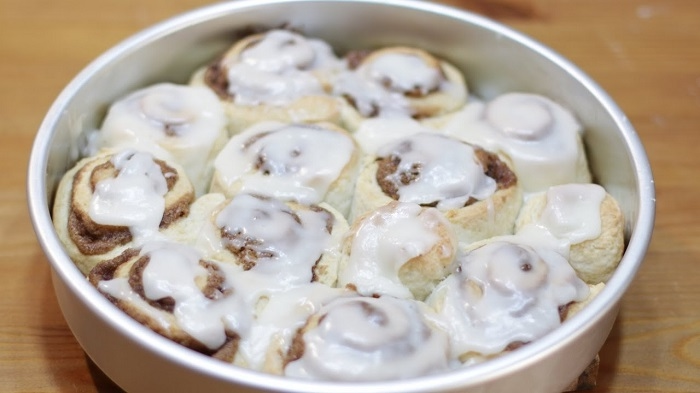
- Place into a prepared baking dish.
Making the Filling
Butter melts first, three full tablespoons, spreading smooth across the base. Over that goes brown sugar – exactly two thirds of a cup, firmly pressed down. Then cinnamon finds its place: two level teaspoons, necessary but open to taste. Sharp heat comes through when using cassia bark, often found in American stores. Softer tones emerge with Ceylon instead, smoothing the overall profile. One isn’t better than the other. A touch of nutmeg can bring depth, even if it’s not classic – it still fits. Half a teaspoon of vanilla ties things together without standing out.
Easy Filling Additions
- Nutmeg
- Vanilla
- Molasses
- Chopped pecans
- Chopped walnuts
Rolling and Cutting the Dough
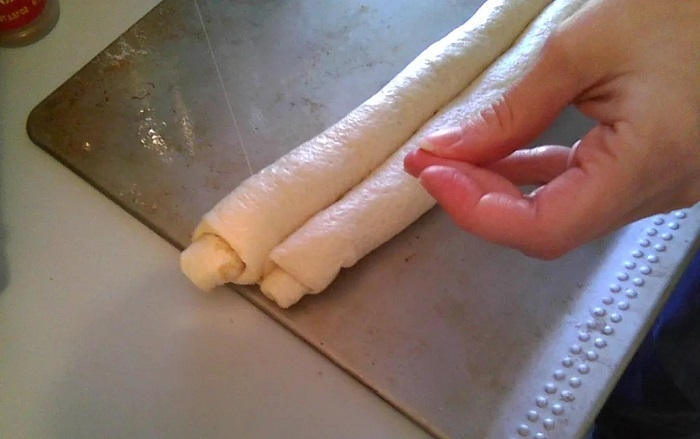
From one edge it begins. Rolling changes everything. Parchment helps lift without tearing. Gentle pressure works best. Firm hands ruin texture, packing filling too tight. Snug matters more than sealed hard. Where ends touch, a wet fingertip joins them. Not forced, just held. Thirty minutes in the cold tightens the dough. When chilled, each cut comes out neater. A slender blade works best – keep it honed. Dragging tears instead of severs. Divide into nine parts, all matching size.
Choosing the Right Pan
Browning changes depending on your pan. Heat spreads slow in light metal. Crisp bottoms happen more often with dark ones. A square eight-inch dish holds them just right. Coat it fully – use butter or oil so they do not stick. Place each roll with the seam facing down. Drape a cloth over top, nothing tight. Skip plastic – it traps wetness and makes things soggy too soon.
Pan Comparison
| Pan Type | Result |
| Light Metal | Gentler browning |
| Dark Metal | Crispier edges |
| Ceramic | Slower heating |
| Glass | Holds heat longer |
Baking the Rolls
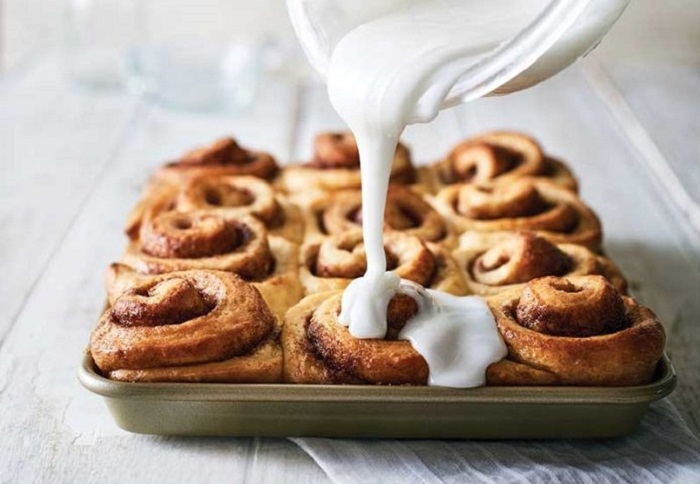
Start by setting the oven to 375°F or 190°C. Since gas models react differently, small shifts might happen because of moisture in the air. Leave inside for twenty minutes. Turn the pan once, midway through, so heat reaches all sides equally. Darkening begins at the borders. The upper surface turns a light golden shade – never let it go deep brown. Right at the core, temperature climbs close to 200°F or 93°C. Take it out without delay once that point hits. Five minutes of rest lets everything settle into place.
Baking Guide
| Step | Temperature or Time |
| Oven Temperature | 375°F (190°C) |
| Bake Time | About 20 minutes |
| Internal Temperature | 200°F (93°C) |
| Rest Time | 5 minutes |
Making the Frosting
Cream cheese? Left out here – typical, yet skipped without issue. One cup of powdered sugar slips through a sieve with ease. Two teaspoons of milk tweak how thick it pours. A quarter-teaspoon of vanilla deepens what’s already there. Mix until no lumps remain. Let it fall in thin streams. Soaks into surface almost right away. Delay too much, base firms up, topping just runs sideways.
Storing Leftovers
Changes happen during storage. At room temp under cover, it holds for just two days. When chilled, the texture turns firmer while scent fades slower. For warming up fast, ten seconds in the microwave brings back some give, though uneven moisture might show. Try an oven instead – five minutes at 300°F (149°C) – it keeps structure more reliably.
Storage Guide
| Method | Result |
| Countertop | About 2 days |
| Refrigerator | Firmer texture |
| Microwave | Quick reheating |
| Oven | Better texture recovery |
Why This Version Feels Different
When ingredients get tough to find, cooking finds a way. Rising dough needs hours, just right warmth, steady hands. Thick milk means thinking ahead or swapping it out smart. Missing these? The kitchen stays warm anyway. Baked goods rose easier once chemical helpers arrived in the 1800s – simple availability made them stick around. Not copies of old styles, these buns belong elsewhere – faster to make, heavier by design, tasting more like seasoned biscuits than coiled pastries. Their feel is tighter, not full of air pockets. The taste hits sweet first, then holds on to warmth through the middle of your tongue. Out of sight, acidity tweaks matter even beyond milk-based setups. Without an acidic partner, baking soda falls short; team it with slow-acting powder for steady rise. Without yeast, there is no alcohol created during the process. The texture misses the faint tang present in classic forms. This change alters how it tastes – where one person senses emptiness, another notices brightness. Spices mix openly with sweetness, unfiltered by fermentation activity.
Walking these paths feels different, though the ground seems known. Not a swap, but another way forward opens up instead. Nothing here tries to imitate traditional cinnamon rolls perfectly. The rise comes differently. The texture feels heavier. The flavor lands in another place altogether. Yet the result still works. Fast, warm, and familiar enough to satisfy, while showing that baking can move forward even when key ingredients stay on the shelf.