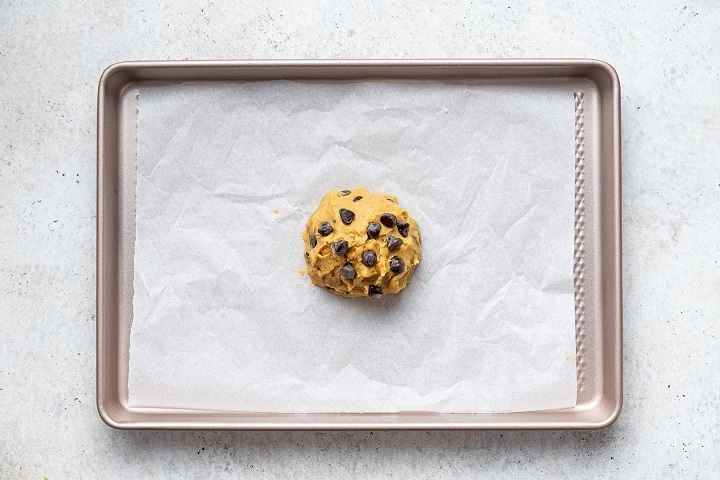

A lone chocolate chip cookie, baked just once, could happen after dark, maybe when the house is quiet. Still, it shows a bigger idea: cooking changes not only because of new ideas but also because of limits. Many desserts expect more than one person. These treats are made for groups, parties, even tomorrow’s crumbs. Alone time shapes how people eat now – think small spaces, less mess. Not because they want luxury, but because it fits. A single plate makes sense when no one else is at the table. Portion size shifts follow life’s rhythm, not trends. What you cook changes when leftovers mean eating the same thing for days. Choices shrink, yet matter more.
Table of Contents
Single Serve Chocolate Chip Simple Ingredients
| Ingredient | Purpose |
| All-purpose flour | Gives structure |
| Brown sugar | Adds sweetness and moisture |
| Baking soda | Helps the cookie rise |
| Butter | Adds richness |
| Milk or water | Brings the dough together |
| Chocolate chips | Adds chocolate flavor |
| Salt | Balances sweetness |
| Vanilla, optional | Adds extra flavor |
Why Single Serve Cookies Work Differently
Baking cookies often means making lots. This comes from how families lived long ago – bigger houses, little fridge space, sharing treats as a routine. Now, living spaces shrink while thinking about wasted meals grows sharper. Research once showed almost a third of American food never gets eaten. Too much batter often sneaks into bowls at home. One-person treats sidestep that overflow. No need to store leftovers. No need to plan around extra cookies sitting on the counter.
Single Cookie vs Full Batch
| Method | Result |
| Full Batch | More leftovers |
| Single Serve | No extra cookies |
| Large Recipe | More ingredients |
| Small Recipe | Faster cleanup |
Why Scaling Down Is Not Always Simple
Start small, but think about what happens when things shrink. Cutting everything down by twelve from a dozen cookies doesn’t guarantee success. Baking soda acts up when tiny amounts are used. It either does nothing or tastes sharp and harsh. A bit here changes more than expected. Now think about what happens when you use part of an egg or just a bit of butter. Changes like these aren’t mistakes. They show cooking doesn’t follow math rules exactly. It bends science in subtle ways. That is why many single-serve recipes rely on simple ingredients that are easier to measure.
Choosing Ingredients for One Cookie
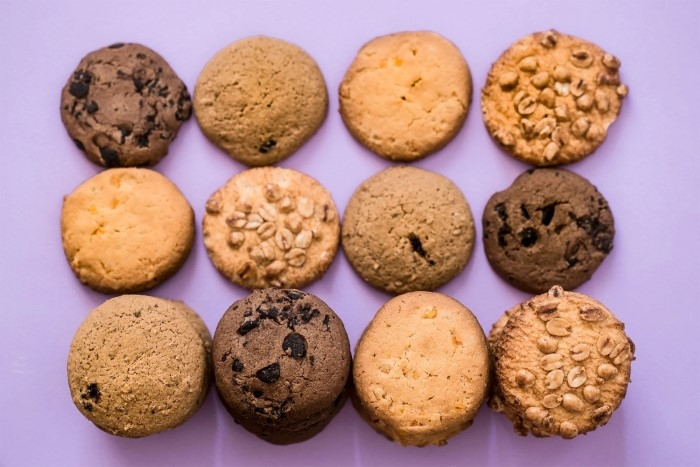
A single portion could be ignored by some who bake. Changing direction, personal servings often depend on whole pieces rather than divided amounts. Bursting with fat, that spoon of peanut butter replaces oil entirely – no need to pause for butter to soften. Instead of eggs, fruit puree slides right into their spot. When chocolate chunks go in, you decide just how rich each bite turns out. Creating balance matters more than mimicking a big recipe exactly. A smaller stage holds just as much weight.
Easy Ingredient Swaps
- Peanut butter instead of extra butter
- Banana puree instead of egg
- Applesauce instead of egg
- Chocolate chunks instead of chips
- Milk or water for moisture
Basic Single Serve Chocolate Chip Cookie Recipe Method
Ingredients
- 2 tablespoons all-purpose flour
- 1 tablespoon brown sugar
- 1/16 teaspoon baking soda
- 1/2 tablespoon softened butter
- Splash of milk or water
- 1 tablespoon chocolate chips or chocolate chunks
- Tiny pinch of salt
- Optional 1/4 teaspoon vanilla extract
Steps
- Besides combining flour and sugar, toss in some baking soda along with a pinch of salt.
- Mix in the butter once it has softened.
- Stir until crumbly.
- A bit of milk might work. Or try water instead.
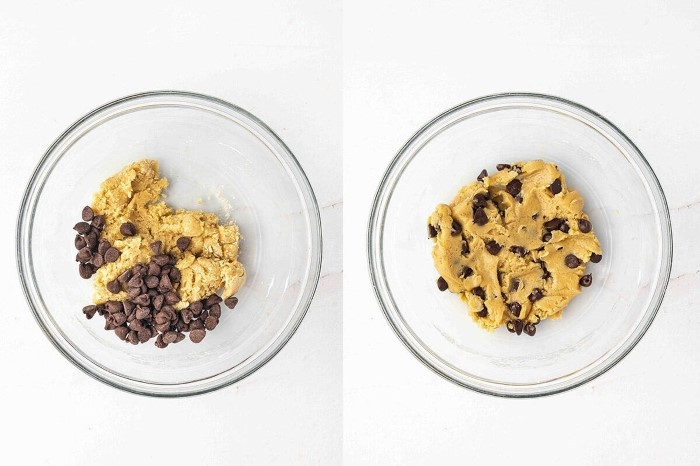
- Knead everything together slowly as the flour soaks up moisture. Soon it pulls into a loose ball that feels tender when pressed.
- Began mixing when the chocolate chips went into the bowl. Finished blending once they were fully combined.
- Bake it like a biscuit. Form as you would a small treat.
- Set it down on something that won’t melt when heated. A flat dish made for microwaves works just fine.
- Once it stops jiggling in the middle, you’re done.
- Wait a moment for it to chill slightly before taking a bite.
Microwave or Oven?
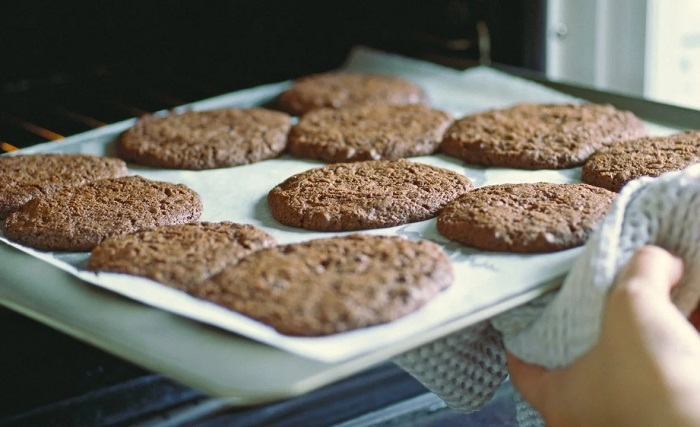
Fresh out of a microwave? Try the oven instead. Set it to 350°F or 175°C. Slide the cookie onto a lined baking tray. Cooking takes about six to eight minutes, give or take. Edge behavior matters most here. Once those firm up, the middle can stay soft. Heat moves slowly through the center, so timing is never exact. Pull it out when the edges look ready even if the center feels slightly tender. For the microwave, start with about one minute. If the middle still feels too soft, add ten seconds at a time.
Baking Methods
| Method | Time |
| Microwave | About 1 minute |
| Extra Microwave Time | 10-second bursts |
| Oven | 6–8 minutes |
| Oven Temperature | 350°F (175°C) |
Why Small Cookies Dry Out Faster
Out of nowhere, things get strange. As kitchen tasks shrink down, the surface area compared to volume jumps fast. One lone cookie dries out faster than a whole tray ever could. Crispy edges show up quickly while the inside still stays soft. Chewy edges draw some people in. Others prefer softer centers. The smaller size makes those differences easier to notice. What feels like a flaw to one person may feel perfect to another.
Why Flour Matters
Most times, the kind of flour changes more than just how things feel. Since it usually holds 10 to 12 percent protein, all-purpose flour stands up well but stays tender. Cake flour might give way too easily when baked. On the flip side, bread flour can turn chewy if used wrong. One version looks whiter after processing – the bleached type – which reacts a bit differently with leavening ingredients.
Still, the difference stays fairly small in a cookie this size.
Flour Comparison
| Flour Type | Result |
| All-Purpose Flour | Best balance |
| Cake Flour | Softer cookie |
| Bread Flour | Chewier cookie |
| Bleached Flour | Slightly lighter texture |
Why Salt Matters
Surprisingly, salt plays a bigger role than many think. A tiny half-pinch, never left out just to keep things simple, actually boosts how sweet something feels on the tongue. Without salt present, sweets come off dull or overly sugary. Even small amounts help balance flavor and improve texture. That little pinch often does more work than people realize.
Small Tools for Small Batches
Out of nowhere, mug cake ideas sparked silicone cups that mimic little bowls, helping batter climb evenly. Not far off, cast iron mini pans appear on countertops, aiming for handcrafted flair. Yet heavy metal holds heat longer and can burn edges if you are not careful. Simple ramekins, small plates, or baking trays usually work best.
Why One Cookie Can Be Enough
A single cookie might look unimportant. Yet it hints at bigger shifts through how we eat, where we live, and what we choose to keep. Old recipes used to travel hand to hand. Now they split into versions shaped by one person at a time. That does not weaken tradition. It reshapes it when living alone becomes common. Every tiny batch respects available time, kitchen space, and real hunger levels.
Stillness says more than noise ever could. Beside pale butter, flour rests like dust on a shelf, sugar lingers – patient, slow – while chocolate gives way wherever warmth touches. Baking it fresh means savoring each bite without rushing. A single cookie can fill the moment just right.