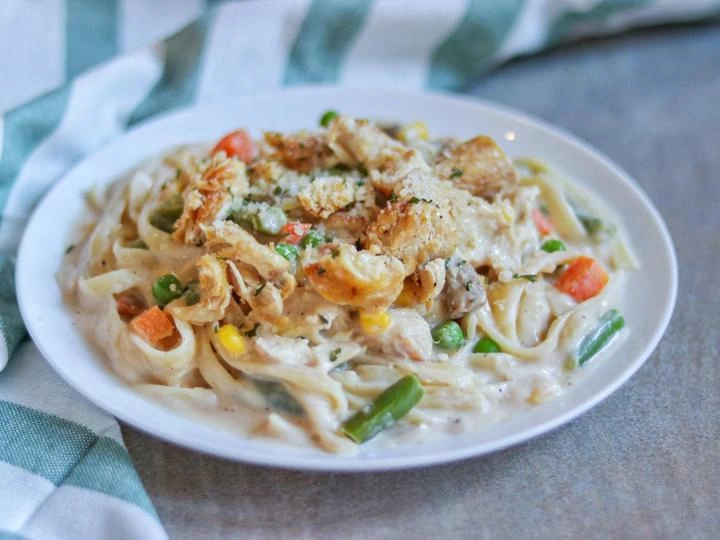

Water heating up. Pots steaming. Sauce simmering slowly. These steps add time people rarely have. Yet here’s something few recipe books admit outright. That creamy stuff from jars labeled Alfredo? Missing the point completely. Real one relies on melted butter mixing with cheese. Starchy liquid from cooked noodles helps bind it together. Bottled kinds leave out that magic altogether. Heavy cream, oils, thickeners, plus powdered cheese – these shape its behavior in cooking. Cooking with it means adjusting your usual method.
Most times, folks grab bottled sauce thinking dinner’s done. Yet here lies the shift – taste wakes up when effort follows instinct. Pouring straight onto noodles? A start. But depth arrives later, shaped by tweaks most skip. Chicken bathed in store-bought sauce won’t sing unless touched further. Stalling happens when hands leave the pot too soon. Flavor grows only if stirred past the obvious.
Table of Contents
Ingredients
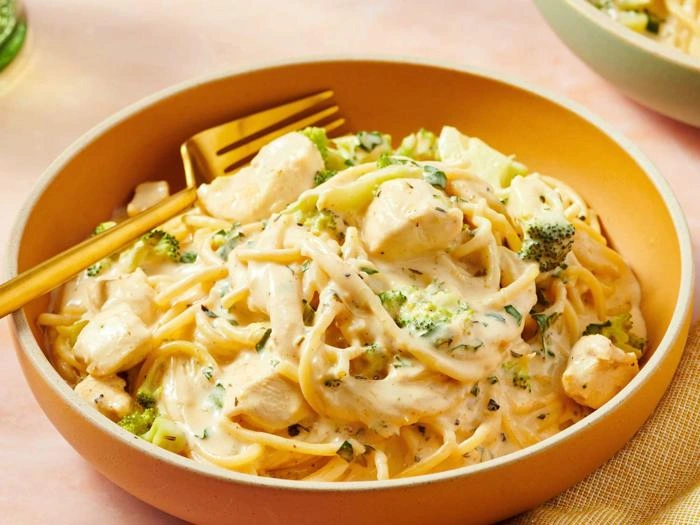
Main Ingredients
| Ingredient | Amount |
| Jarred Alfredo sauce | 1 jar |
| Boneless chicken thighs | About 1½–2 pounds |
| Fettuccine | 12–16 oz |
| Parmigiano-Reggiano | 2 tablespoons, freshly grated |
| Pasta water | Reserved from cooking |
| Salt | As needed |
| Black pepper | For garnish |
| Fresh parsley | Optional |
Choose Your Chicken First
Choose your protein first. Instead of breasts, go with boneless thighs – they handle heavy sauces without falling apart. Reheating tends to leave breast meat dry. Thanks to extra fat and connective tissue, thighs turn tender when warmed slowly. Their texture deepens, becoming richer over gentle heat.
Dry the meat off first. Sprinkle salt on each side. Wait ten minutes as the oil warms in a pan – use medium-high heat here.
Leave the Skin On If Possible
Leave the skin on when you cook it, if you can. That crispy layer shields the meat inside, building flavor down the line. When it hits a rich gold, turn it over and keep going until done.
Take it off the heat, set it aside. Wait before cutting. Heat keeps moving inward, gently finishing what the stove started.
Cook the Fettuccine
Once the chicken is off the heat, start boiling the fettuccine. Fill the pot with enough water, adding a modest amount of salt – remember, store-bought sauce has sodium built in. Too much salt in the cooking water makes it worse.
Start by reading the package details – certain labels show more than 400mg in one portion.
Prepare only until it holds a slight firmness when bitten. How it feels in your mouth beats the clock every time. Try a piece five minutes earlier than printed.
Save the Pasta Water
Let the water out, yet keep behind a small amount of thick cooking liquid.
| What to Save | Why It Matters |
| Pasta water | Helps loosen the sauce |
| Starchy liquid | Improves texture |
| A few spoonfuls | Adds body without thinning flavor |
Heat the Jar Sauce Slowly
Start here. Move some of the sauce – only what sticks – to a pan that hasn’t been heated. That’s right, leave it cool at first.
Letting warmth rise bit by bit keeps it smooth. Even if the jar claims stability, sharp heat can split creamy mixtures.
Hold the flame low, bring it up slow. Once steam starts rising, toss in a few splashes of saved water. That keeps it loose but still rich in taste.
Improving Texture with Cheese
Texture shifts when you stir. Wooden spoons drag in a way silicone never does. Bits stick along the rim, trapping tiny lumps here and there. Doesn’t matter much.
Perfect silkiness? Not what we want. Just enough grit brings chew.
Heat it two full minutes before tossing in the shredded Parmigiano-Reggiano. It doesn’t melt right if it’s already grated. Shaved by hand starts patchy, yet blends in completely later.
The Role of Fresh Parmesan
Silkiness shows up mostly in how it feels, not how it tastes. What brings that texture? Fresh cheese, its fat meeting starchy water.
Just two spoons – no more.
Go past and the whole thing drowns. Less than that, you might as well skip it.
Ease it in slow, mixing without force. Pause a half minute after adding. Tilt your spoon. If sauce drags just a touch, you’re there.
Bring Everything Together
Pieces of chicken lie still until sliced across their fibers. A tilt of the blade changes how thick each section appears. Broader surfaces hold onto flavor better when coated.
Pasta slips into the heated blend with a gentle push. Tools made for gripping lift loops upward instead of turning them hard. Too much motion drops temperature before heat spreads evenly.
Protein joins the dish only after everything else settles. Warmth passes through it while avoiding any slow cook at the end.
Garnishing the Dish
A little goes a long way when it comes to garnishing.
Simple Garnishes
- Freshly cracked black pepper
- Fresh parsley
If the parsley isn’t crisp, it pulls attention where it shouldn’t. Warmth rises more easily with black pepper in play.
Breaking the peppercorns just before serving wakes up their hidden scents. A single twist covers it.
Skip the added cheese – the sheen is already there.
Reheating Leftovers
Leftovers need attention when warmed up. Rubber patches often form in the microwave. The oven? Too slow most times.
Try a nonstick pan instead – use one with a lid. Set the burner just below the center mark. Add a teaspoon of liquid per portion, either water or milk. Trap the air by closing it off for a minute and a half. Lift the cover, then flip things around gently.
Moisture moves better that way.
Reheating Guide
| Method | Result |
| Microwave | Rubbery patches may form |
| Oven | Slow heating |
| Covered skillet | Best balance |
| Water or milk added | Restores moisture |
How the Dish Changes Over Time
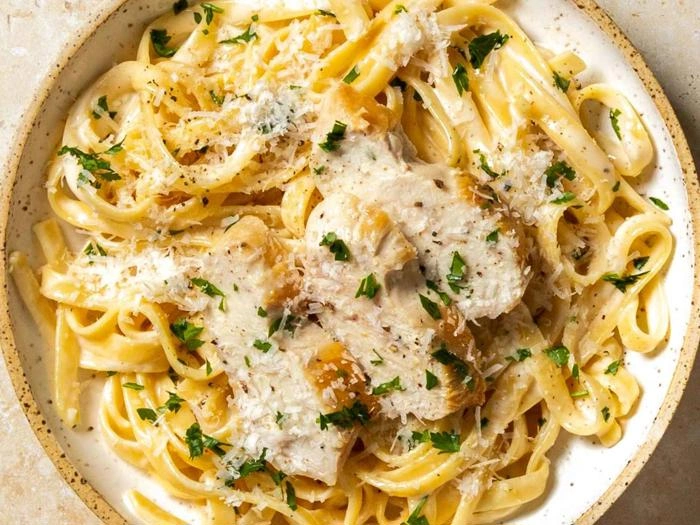
Each time you serve it, the feeling changes. The first spoonful coats the mouth heaviest. As hours pass, the mix loses body since oil sinks by morning. Shake it well and smoothness returns.
Skip tap water when reheating – dairy brings structure through hidden helpers.
Also Read: Alfredo Sauce Recipe with Heavy Cream: A Rich and Creamy Modern Version
Serving Suggestions
Most boxes lie about how much food you get. Once boiled, fettuccine hardly swells at all compared to what they promise.
What’s labeled as enough for four people barely covers two deep bowls.
Plan ahead knowing that.
Good Side Options
- Plain leafy greens
- Steamed vegetables
- Light salads without strong dressing
Instead of a tangy salad soaked in dressing – where sharp flavors clash with richness – go for untouched veggies or plain leafy greens.
What to Drink with Chicken Alfredo
Wine feels right to some. Yet fat in food softens tannins. Harshness creeps into reds. Fruit fades from whites.
Water? Still the best match.
It clears the heaviness, sip by sip.
Understanding Jar Sauce
Start with what’s real – no bundle of herbs can mask the work done.
Garlic that’s powdered sticks around past its fresh cousin. When onions show up on labels, think dried pieces, not crisp chunks.
See each level for what it is, skip the make-believe.
Final Thoughts
Skip the tricks.
Take the jar as it is. Stay inside its borders. Change how things unfold, what comes next, even small details at the end – never touch the heart of it.
When clutter fades, clean motion keeps going.
Even now, centuries past, one truth remains fixed: how you do something bends the result far more than where it began.