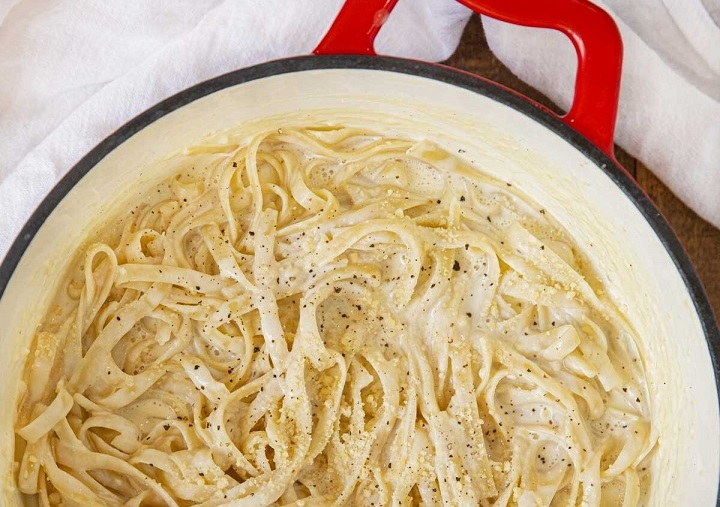

That smooth glide of a creamy sauce? Most folks stop there. Yet when cream cheese slips into Alfredo, the real shift hides beneath – less about how thick it feels, more about how sharp or soft the taste lands. Fat matters, sure. But what changes everything is acidity. A quiet player. The kind you notice only when it’s missing.
Table of Contents
Alfredo Sauce With Cream Cheese Simple Ingredients
| Ingredient | Purpose |
| Cream Cheese | Adds body and tang |
| Parmesan Cheese | Traditional Alfredo flavor |
| Butter | Creates richness |
| Pasta Water | Helps emulsify the sauce |
| Fettuccine | Holds sauce well |
| Salt | Enhances flavor |
| Filtered Water | Helps sauce stay stable |
Why Cream Cheese Changes Alfredo Sauce
Stirring hot pasta water into butter and Parmigiano Reggiano creates a smooth blend – heat and motion pull apart the cheese’s casein proteins so they latch onto water. Only then does it thicken just right. But add anything else, say cream cheese, and the mix turns grainy if you ignore how sourness alters those same proteins. That shift stops them from bonding cleanly. Each extra ingredient tilts the balance unless its effect on acidity is clear. Temperature matters more once acids enter.
Thick texture defines Philadelphia-style cream cheese, standing out from many others. Around 4.8 to 5.0, its acidity comes from slow bacterial activity during making. Parmesan runs milder, settling near 5.3 once aged fully. Heat applied too fast pulls them apart, those mismatched acid levels reacting poorly at first. Still, with careful warming – patience guiding the way – they blend smoothly instead of splitting.
Cheese Comparison
| Cheese | Approximate pH |
| Cream Cheese | 4.8–5.0 |
| Parmesan | Around 5.3 |
How to Make Alfredo Sauce With Cream Cheese
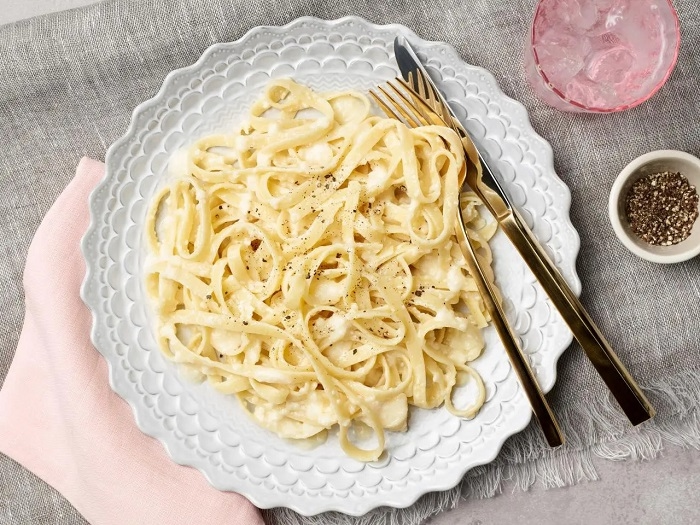
Ingredients
- Cream cheese
- Parmesan cheese
- Butter
- Hot pasta water
- Fettuccine
- Salt
Steps
- Start by warming butter gently.
- Add cream cheese while the mixture remains below 160°F (71°C).
- Stir continuously as it softens.
- Slowly add Parmesan cheese.
- Mix in hot pasta water little by little.
- Continue stirring until smooth.
- Toss with cooked fettuccine.
- Serve immediately.
Why Timing Matters
Most people wait too long, dumping cream cheese in at the last moment because they’re worried. Instead, slip it in sooner – while the pot is still under 160°F (71°C) – and keep stirring without pause. Proteins unwind slow and even that way, never seizing up. After it blends in, the texture splits quietly into two parts: firm stretch from aged cheese meets the thick give of softer curds.
Store-Bought vs Homemade Cream Cheese
Here’s something people rarely mention: calcium citrate amounts. Most mass-produced cream cheeses include things such as carob bean gum and calcium phosphate – added to last longer on shelves. Because of these, how firmly it gels changes. When you make it yourself with nothing added, the feel turns completely different – even if two packages both say “original.” Checking half a dozen store versions revealed thickness varied by nearly a quarter, even when ingredient labels matched exactly. The reason hides in how fast factories heat the milk; that pace reshapes tiny protein groupings while it’s happening.
Cream Cheese Additives
| Additive | Purpose |
| Carob Bean Gum | Improves texture |
| Calcium Phosphate | Helps stability |
| Calcium Citrate | Affects gel structure |
Why Water Matters
Surprisingly, what comes out of the faucet matters more than most think. When chloramine lingers in water, it tugs at sulfur-linked protein chains in whey, just enough to loosen their grip on fats and liquids. Filtered water skips this nudge entirely, leaving mixtures stable far longer. A small difference – yet one that keeps sauces intact instead of pooling grease beside dinner.
Choosing the Right Pasta
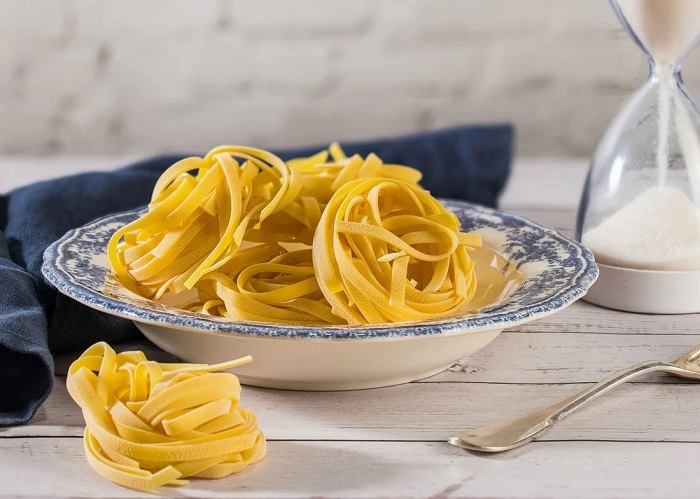
Pick pasta carefully – it plays a unique role compared to older methods. Flat shapes like fettuccine hold up better since they don’t heat too fast, leaving time for sauce to cling rather than drip away. Yet whether you go for dry egg version or fresh shifts how starch behaves during cooking, changing how well the leftover water mixes back in. With fresh ones, there’s less amylose let out, which means fewer loose sugar chains stand ready to keep oil droplets steady inside water.
Pasta Options
| Pasta Type | Result |
| Fettuccine | Holds sauce well |
| Fresh Pasta | Releases less starch |
| Dry Pasta | Releases more starch |
Salt and Flavor Development
Most folks only think about how salty something tastes, but the kind of salt shifts the whole texture experience too. When you chew a bite with sea salt that hasn’t been processed, it takes longer to break down compared to regular table salt – so the real punch of flavor shows up only after you’ve crunched a few times. On another note, using iodine-enriched salt alongside aged cheese or yogurt can leave behind a subtle sharpness, almost like old coins, because the added potassium iodide reacts quietly with bits of enzyme still active after heat treatment.
Salt Comparison
| Salt Type | Effect |
| Sea Salt | Slower flavor release |
| Table Salt | Faster flavor release |
| Iodized Salt | May add slight sharpness |
What Happens After Cooking
Here’s something most overlooked: food keeps cooking past the stove. Left in a hot pot, water keeps escaping thanks to leftover warmth. Three quiet minutes add about 9% density – though not evenly, just patchy pockets of thickening. Movement breaks that pattern, spreading out the stored heat.
Heavy cream pulls against sharp cheese right from the first bite. A quiet fight lives inside what seems soft. One element refuses to blend without a push. Balance shows up only when friction gets shaped on purpose.