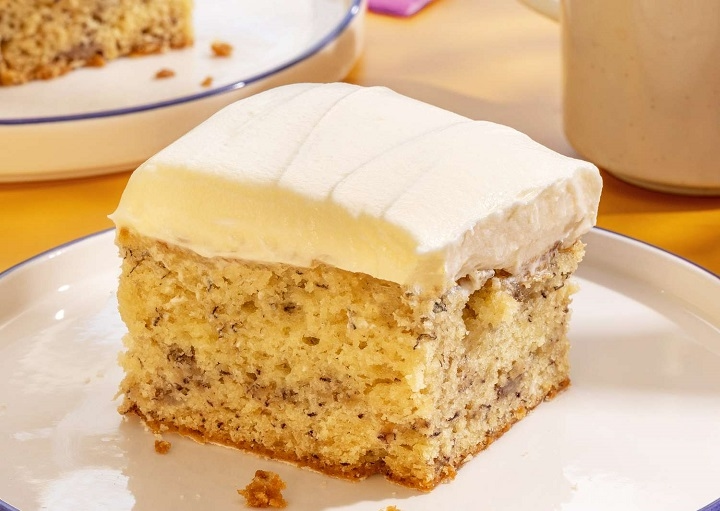

Boxed cake mix usually suggests something lost in exchange for ease. Still, banana cake built from one proves otherwise without fanfare. Not newness drives it, instead the steady rhythm of very ripe bananas meeting pre-made blend – flour, sweetness, rising dust. Skill matters little here. What counts is setting those two elements together, stepping back while they show their quiet strength untouched.
Table of Contents
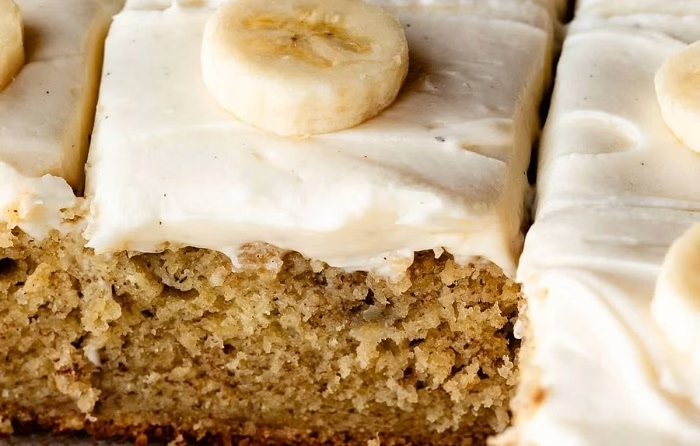
Banana Cake Simple Ingredients
| Ingredient | Purpose |
| Cake Mix | Provides flour, sugar, and leavening |
| Ripe Bananas | Add moisture and flavor |
| Eggs | Help bind the batter |
| Oil | Adds softness |
| Vanilla Extract | Enhances sweetness |
| Chocolate Chips or Nuts | Optional mix-ins |
| Powdered Sugar | Optional topping |
Why Ripe Bananas Matter
Chunks of banana beat smooth every time. When they melt slow in the oven, those bits keep the crumb from turning stiff. Moisture hides inside them, staying put where it is needed most. Instead of whipping everything into foam, a fork stirs gently, protecting what needs protection. Too much mixing pulls out pectin early – a trap that leaves centers gluey. Uniform looks? Not worth the price. What fights back slightly when stirred – that wins. Usually you mix in eggs, oil, then water. Instead of water, try mashing in banana – same amount, just swap it straight across. That thick fruit bumps up how dense the batter feels, yet nothing else has to change. For every four tablespoons replaced, wetness climbs close to a quarter again, plus hidden sugar shows up during baking, browning the sides gently. Bananas near spoiling, skin dark with spots, bring sweet depth along with a touch of sour zip; that little tang plays off the baking soda hiding inside common cake blends. No need bringing more rising powder into play.
Banana Guide
| Banana Stage | Result |
| Yellow | Mild flavor |
| Spotted | Sweeter |
| Very Dark | Best for baking |
| Frozen and Thawed | Softer texture |
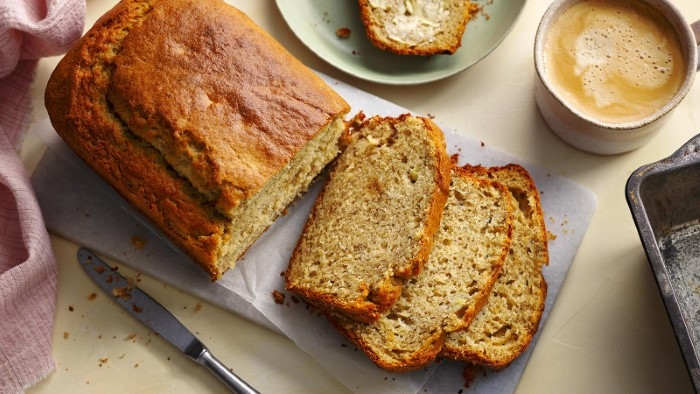
How To Make Banana Cake With Cake Mix
Ingredients
- 1 box cake mix
- 2 cups mashed ripe bananas
- Eggs (according to cake mix instructions)
- Oil (according to cake mix instructions)
- Vanilla extract
- Optional chocolate chips
- Optional chopped nuts
Steps
- Preheat the oven to 350°F.
- Mash ripe bananas using a fork.
- Replace the water called for on the box with an equal amount of mashed banana.
- Mix eggs, oil, and bananas together.
- Add the cake mix.
- Stir gently until combined.
- Use about fifty spatula strokes – no more than needed.
- Pour into a prepared pan.
- Bake until done.
- Cool in the pan for fifteen minutes before removing.
Mixing and Batter Texture
Cold butter or oil warmed in the microwave often gets suggested. Still, once liquid, the fat mixes too fast, wrapping around flour right away so no air stays caught. Oil left out for about twenty minutes blends slowly if stirred on medium. That slow mix helps create a softer texture inside. After adding ingredients, fast stirring breaks up air pockets. A quick fifty passes using a spatula spreads everything smoothly again – just enough, never too much.
Choosing the Right Pan
Heat spreads better in light aluminum pans, so edges stay safe. Yet dark nonstick ones pull in warmth quicker, pushing crust formation early. Skin on batter shows up around ten minutes – then puffing inside drops off. That shift sinks the peak. Shape isn’t the real player here. Beneath the middle, lower positions help balance heat. A spot just above mid-point pulls warmth higher up, guiding even rise.
Pan Comparison
| Pan Type | Result |
| Light Aluminum | More even baking |
| Dark Nonstick | Faster crust formation |
| Loaf Pan | Denser center |
| Cake Pan | More even texture |
Baking Temperature Matters
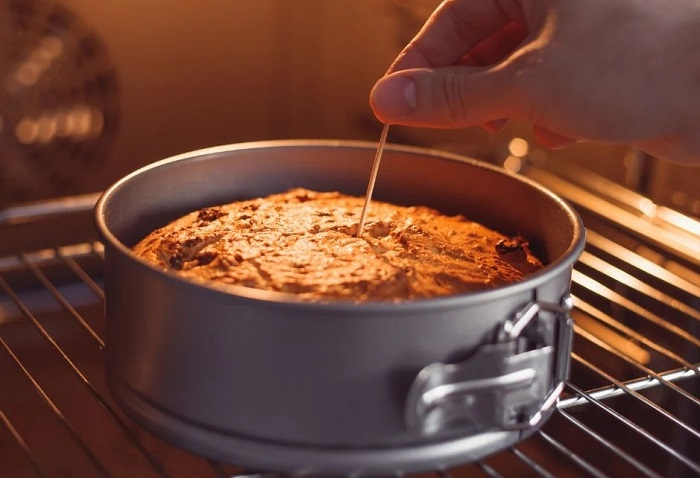
Some kitchen ovens swing by as much as twenty-five degrees above or below the set point. When you dial in three hundred fifty, it might really be running at three seventy. Bananas start breaking down quickly once their center hits one eighty. Too much heat makes sulfur from yolks mix with iron inside the fruit, leaving pale gray lines around the middle. It won’t hurt anyone – just means things got too hot. A toothpick test is still how most check cake readiness. But yanking it out too soon tells its own story. Twenty-eight minutes into baking, inside a regular loaf tin, goo sticks heavy on the pick. Hold off another five: stickiness fades to faint drag, finally nothing at all. A reading between 200 and 205 degrees Fahrenheit is where it stops being ideal. After that point, things go downhill fast.
Baking Guide
| Check | What To Look For |
| Toothpick Test | Slight drag, not wet batter |
| Internal Temperature | 200–205°F |
| Cooling Time | 15 minutes in pan |
Optional Add-Ins
Some bakers skip chocolate chips altogether. Since they’re heavier than the batter, down they go. Try shaking a bit of dry mix over them before stirring – that dusting slows their drop. Chopped nuts behave just like that too. Nothing coated? Expect a quick dive to the bottom. Smell plays a big role in how sweet something tastes. Though it seems odd, that hint of vanilla tricks your nose into sensing more sugar.
When you swap one teaspoon for two, the flavor deepens without extra calories.
- Chocolate chips
- Chopped nuts
- Extra vanilla extract
- Powdered sugar topping
Storage and Freshness
Overnight, water inside begins shifting toward the surface. Once cool, wrapping the cake in paper first, then foil, holds moisture just right – stops droplets from forming. Big bakeries do this quietly, never really talking about it. Most people reach for plastic first when storing things. Yet glass jars work too, especially if the lid sits slightly ajar – just enough air moves through to slow down mold while letting the surface stay firm. A paper bag? That pulls moisture fast, so sogginess never sets in like it sometimes does inside tightly closed containers.
Storage Options
| Method | Result |
| Paper + Foil | Holds moisture well |
| Glass Container | Allows airflow |
| Plastic Container | Can trap moisture |
| Paper Bag | Keeps surface firm |
Small Details That Matter
Sometimes you do not need to change things for height. Under 3,000 feet, premade cake blends work just fine. When higher, air pressure drops, so water boils sooner. Because of this, steam grows faster inside the batter. The dessert puffs up rapidly – after that, it collapses. Start with a spoonful of flour for each cup, maybe two. Baking powder? Back it off some when it shows up on its own – the blend likely covers that already.
Bananas tip the scale at 118 grams once stripped of their skin. Four of them, medium sized, fill two cups when squashed together. A weighing device gives truer results than measuring lines. Volume checks can’t match that kind of precision. A light sprinkle of powdered sugar after cooling gives a look that stands out, also changes how it feels when eaten. Frosting is unnecessary here. Whipped cream brings a soft touch but does not last long on the shelf. Buttercream takes charge too much, drowns delicate flavors.
This way works through care, not invention – watching signs of ripeness, how things carry current, molecules shifting when warmed. It does not seem groundbreaking. Still, small decisions pile up. Every move happens beneath notice until a flavor clicks – no more than familiar, never striking, simply matching what you recall. Here is how it works: letting it cool for fifteen minutes inside the pan holds everything together. Take it out too early, and the edges sink inward. Wait past that window, heat lingering underneath makes the outer layer damp again. The right moment fits tight. Room for error nearly gone.